


How does IVF Lab Design ensure contamination control?
INTRODUCTION
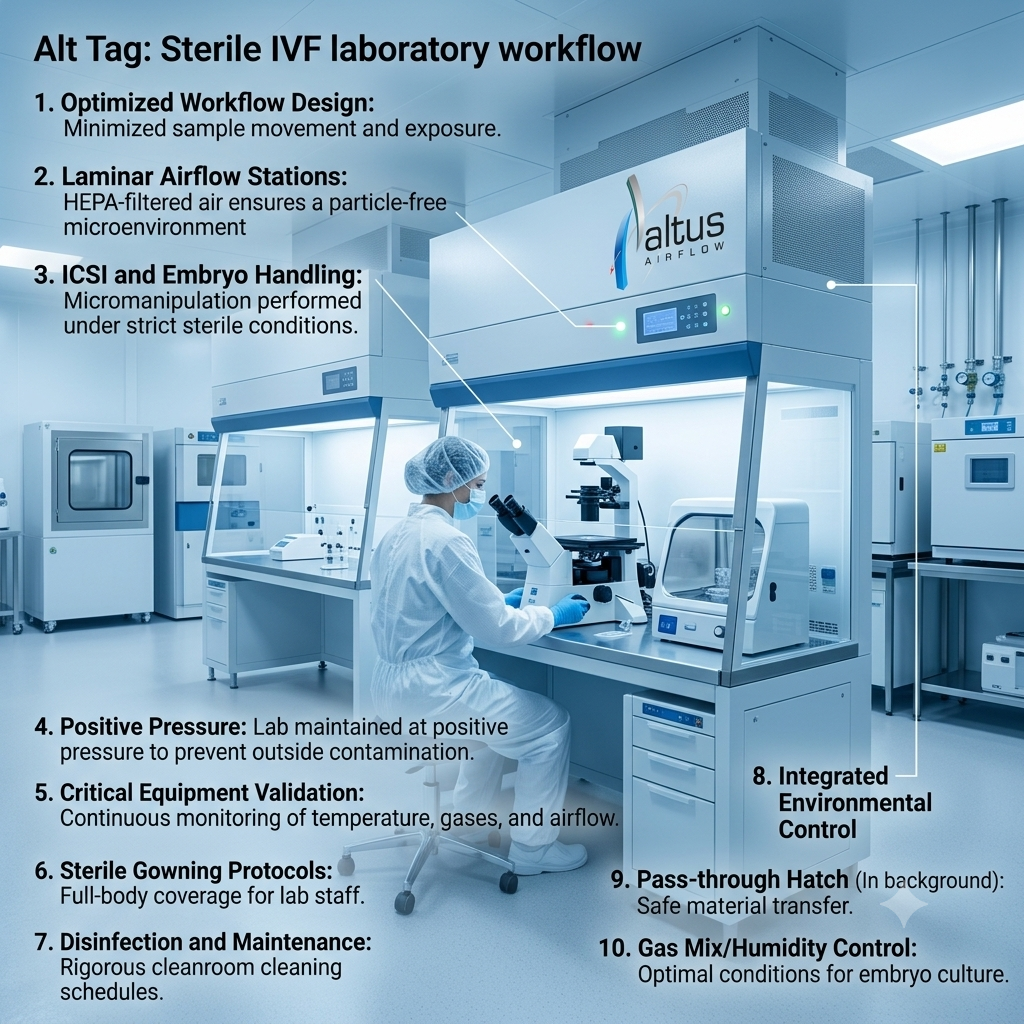
IVF Lab Design is one of the most critical factors influencing the success of fertility treatments because embryos, oocytes, and sperm are highly sensitive to environmental conditions. Even the smallest airborne particle, microbial contaminant, or fluctuation in temperature and humidity can negatively affect embryo development and laboratory performance. A professionally planned IVF laboratory is designed with contamination control as its primary objective, incorporating advanced cleanroom engineering, HEPA filtration, HVAC systems, laminar airflow, positive pressure environments, seamless interiors, and strict workflow planning. These features work together to create a sterile, controlled environment that minimizes contamination risks while supporting consistent laboratory operations and improved clinical outcomes.
Modern fertility clinics rely on advanced laboratory infrastructure to maintain the highest standards of cleanliness and environmental stability. This blog explains how IVF Lab Design ensures contamination control and why it is essential for successful assisted reproductive technology (ART) procedures.
Why Contamination Control Is Important in IVF Laboratories
Embryos are extremely delicate and can be affected by even minor environmental contaminants.
Effective contamination control helps:
- Protect embryos and gametes
- Improve laboratory efficiency
- Reduce infection risks
- Maintain consistent environmental conditions
- Support successful IVF outcomes
- Ensure regulatory compliance
A contamination-free laboratory is the foundation of reliable fertility treatment.
Cleanroom Engineering
Professional IVF laboratories are designed using cleanroom engineering principles.
These include:
- Controlled air movement
- Sterile zoning
- Contamination barriers
- Environmental monitoring
- Controlled access
Cleanroom design minimizes the entry and spread of contaminants.
Laminar Airflow Systems
Laminar airflow systems provide a continuous flow of filtered air across sensitive work areas.
Their advantages include:
- Uniform airflow
- Reduced airborne particles
- Minimal air turbulence
- Cleaner laboratory environment
- Enhanced embryo protection
Laminar airflow significantly lowers the risk of airborne contamination.
HEPA Filtration
High-Efficiency Particulate Air (HEPA) filters are essential components of IVF Lab Design.
HEPA filtration helps:
- Remove microscopic airborne particles
- Reduce microbial contamination
- Improve indoor air quality
- Maintain sterile laboratory conditions
Efficient filtration creates a safer environment for embryo handling.
Advanced HVAC Systems
Modern HVAC systems regulate laboratory environmental conditions with precision.
They control:
- Temperature
- Humidity
- Air pressure
- Fresh air supply
- Air changes per hour
Stable environmental conditions reduce contamination risks and support embryo viability.
Positive Pressure Rooms
Positive pressure ventilation prevents contaminated air from entering sensitive laboratory spaces.
Benefits include:
- Continuous outward airflow
- Reduced cross-contamination
- Cleaner workspaces
- Improved laboratory protection
Positive pressure is a key feature in contamination-controlled IVF laboratories.
Temperature and Humidity Control
Environmental stability is essential for embryo development.
Automated systems maintain:
- Consistent temperature
- Controlled humidity
- Stable laboratory conditions
Maintaining these parameters prevents unnecessary stress on reproductive cells.
Low Volatile Organic Compound (VOC) Materials
Construction materials used in IVF laboratories are carefully selected.
Preferred materials offer:
- Low VOC emissions
- Chemical resistance
- Easy cleaning
- Long-term durability
Reducing VOC exposure helps protect embryo quality.
Seamless Hygienic Interiors
Smooth, joint-free finishes reduce dust and microbial accumulation.
Common features include:
- Seamless wall panels
- Medical-grade flooring
- Hygienic ceilings
- Rounded corners
These surfaces simplify cleaning and reduce contamination risks.
Controlled Laboratory Zoning
An efficient IVF laboratory separates activities into dedicated zones.
Typical areas include:
- Semen processing
- Embryology laboratory
- Cryopreservation
- Equipment rooms
- Storage areas
Proper zoning prevents cross-contamination between laboratory functions.
Restricted Access Control
Limiting unnecessary movement helps maintain clean conditions.
Access control measures include:
- Authorized personnel entry
- Controlled door systems
- Defined workflow paths
- Visitor restrictions
Reduced traffic minimizes airborne contamination.
Environmental Monitoring Systems
Continuous monitoring ensures optimal laboratory performance.
Parameters monitored include:
- Temperature
- Humidity
- Differential pressure
- Air quality
- Particle counts
Real-time monitoring enables rapid corrective action if conditions change.
Equipment Placement and Workflow
Strategic equipment placement minimizes unnecessary movement.
Well-planned workflows provide:
- Efficient laboratory operations
- Reduced contamination opportunities
- Faster sample handling
- Improved staff productivity
Optimized layouts contribute to cleaner working conditions.
Sterile Laboratory Equipment
Equipment used in IVF laboratories is selected for hygienic performance.
Examples include:
- Laminar airflow workstations
- CO₂ incubators
- Tri-gas incubators
- Microscopes
- ICSI systems
These systems are designed to support contamination-free laboratory procedures.
Routine Cleaning and Validation
Professional IVF laboratories implement strict cleaning protocols.
Validation procedures include:
- HEPA filter testing
- Airflow verification
- Pressure testing
- Temperature mapping
- Environmental qualification
Regular validation confirms that contamination control systems perform as intended.
Staff Hygiene Protocols
Personnel play an important role in maintaining laboratory cleanliness.
Standard practices include:
- Protective clothing
- Hand hygiene
- Sterile handling techniques
- Controlled laboratory entry
Proper staff training complements engineering controls.
Digital Monitoring and Automation
Automation improves contamination management.
Advanced systems offer:
- Continuous environmental monitoring
- Automated alarms
- Data logging
- Predictive maintenance
These technologies improve consistency and reduce manual errors.
Benefits of Contamination Control in IVF Lab Design
A professionally designed laboratory provides several important advantages:
- Improved embryo protection
- Enhanced laboratory cleanliness
- Reduced contamination risks
- Better workflow efficiency
- Stable environmental conditions
- Higher operational reliability
- Regulatory compliance
- Improved IVF success rates
- Long-term laboratory performance
These benefits contribute to safer and more efficient fertility treatment.
Conclusion
Effective IVF Lab Design ensures contamination control by combining cleanroom engineering, laminar airflow systems, HEPA filtration, advanced HVAC technology, positive pressure ventilation, seamless hygienic interiors, environmental monitoring, controlled zoning, and optimized laboratory workflows. Together, these features create a highly controlled environment that protects embryos, minimizes contamination, improves operational efficiency, and supports successful fertility treatments. Investing in a professionally designed IVF laboratory helps clinics achieve consistent performance, regulatory compliance, and long-term reliability. For customized IVF laboratory planning, engineering, installation, validation, and turnkey solutions, Altus Airflow provides advanced infrastructure tailored to the highest standards of modern fertility care.
Frequently Asked Questions
1. How does IVF Lab Design control contamination?
IVF Lab Design controls contamination through cleanroom engineering, HEPA filtration, laminar airflow systems, advanced HVAC systems, positive pressure ventilation, and continuous environmental monitoring.
2. Why is laminar airflow important in IVF Lab Design?
Laminar airflow in IVF Lab Design provides a continuous stream of filtered air that removes airborne particles and helps maintain sterile laboratory conditions.
3. Does IVF Lab Design include HEPA filtration?
Yes. Professional IVF Lab Design incorporates HEPA filtration systems to remove microscopic contaminants, improve air quality, and protect embryos during laboratory procedures.
4. How do HVAC systems improve IVF Lab Design?
HVAC systems in IVF Lab Design regulate temperature, humidity, air pressure, and air circulation to maintain stable environmental conditions essential for embryo development.
5. Why is contamination control important in IVF Lab Design?
Contamination control in IVF Lab Design protects embryos and reproductive cells, reduces infection risks, improves laboratory performance, supports regulatory compliance, and contributes to better IVF success rates.
Read Our Previous Blog------>What are the key features of an Ophthalmic Modular Operation Theatre?
