


What Patients Should Understand About Ketamine Infusion Therapy Results
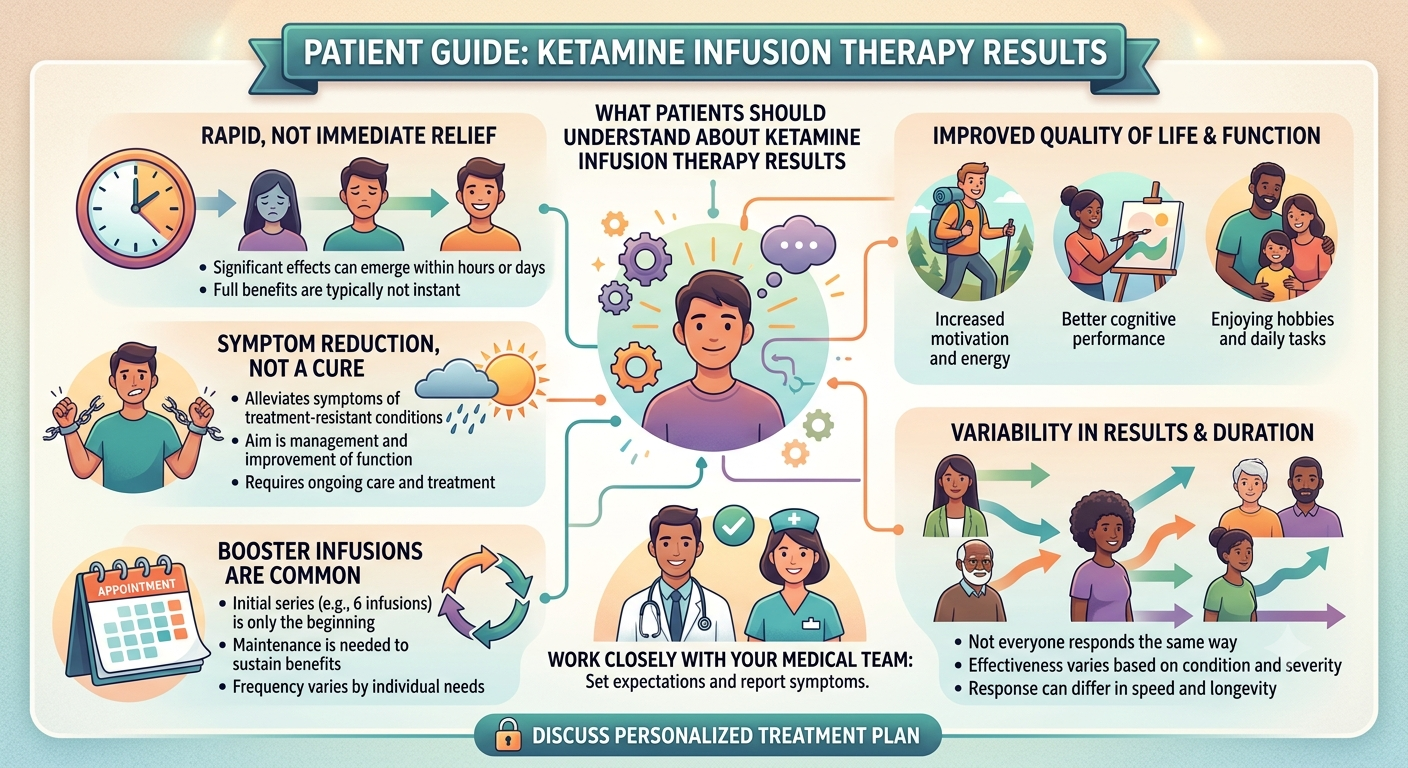
Depression treatment can be frustrating when improvement is slow or several medications have already failed. Ketamine Infusion Therapy has gained attention because some patients notice meaningful changes within hours or days. That speed is unusual in psychiatric care, but it can also create unrealistic expectations. Ketamine does not work for everyone, one infusion rarely tells the full story, and early symptom relief may not last without additional treatment. Patients need to understand what clinical results actually mean before deciding whether the therapy has succeeded.
Results Can Appear Quickly, but They Vary
Traditional antidepressants often require several weeks before their full effects can be assessed. Intravenous ketamine may act much faster in some patients with treatment-resistant depression.
In a randomized clinical trial, 64 percent of patients who received intravenous ketamine met the criteria for a treatment response after 24 hours. The response rate was 28 percent among patients who received midazolam, an active comparison medication. The ketamine group also showed a greater reduction in depression-rating scores.
These findings are promising, but patients should understand what “response” means. In depression research, a response commonly refers to a reduction of at least 50 percent in measured symptoms. It does not necessarily mean that every symptom has disappeared or that the patient has entered remission.
A patient may sleep better, feel less emotionally overwhelmed, regain some motivation, or experience fewer intrusive thoughts while still meeting the criteria for depression. That improvement can be clinically meaningful. It can also be incomplete.
Research results differ across studies. A 2023 review reported response rates of approximately 54 percent after single infusions and 55 percent after serial infusions. Reported remission rates were approximately 30 percent and 40 percent, respectively. Differences in patient characteristics, dosing schedules, study designs, and outcome measurements make direct comparisons difficult.
This variability is central to understanding Ketamine Infusion Therapy. Some people experience a dramatic shift. Others notice gradual or modest improvement. A portion of patients receive little or no benefit. No responsible provider can guarantee a particular result before treatment begins.
Several Infusions May Be Needed
Patients sometimes expect the first infusion to produce an immediate and obvious transformation. That can happen, but it is not the only pattern.
In a study examining single, repeated, and maintenance infusions, 59 percent of participants eventually met response criteria after repeated treatments. The median patient required three infusions before achieving a response. The study also found that repeated treatments produced cumulative antidepressant effects.
This means a limited reaction after the first appointment does not automatically prove that the treatment has failed. Clinicians often evaluate results across a planned series, using standardized symptom scales and reports of daily functioning.
Useful changes may include:
-
Improved sleep or morning energy
-
Greater interest in everyday activities
-
Reduced feelings of hopelessness
-
Better concentration
-
Less social withdrawal
-
Improved ability to participate in psychotherapy
Patients should track specific changes rather than relying only on whether they “feel different.” Depression can distort memory and self-evaluation. Written mood records, sleep notes, symptom questionnaires, and observations from trusted family members can help provide a clearer picture.
At the same time, clinics should not continue treatment indefinitely when there is no measurable benefit. Evidence about the ideal dose, frequency, total number of infusions, and maintenance schedule remains incomplete. A 2024 study noted that there is still insufficient evidence to determine the best repeated-dose schedule for every patient.
The decision to continue should therefore depend on documented improvement, tolerability, medical safety, cost, and the patient’s broader treatment goals.
Improvement May Fade Without Continued Care
Rapid improvement does not always mean permanent improvement. Ketamine’s antidepressant effects may weaken after treatment stops.
In one repeated-infusion study, 70.8 percent of participants responded by the end of the treatment series. Among those who responded, the median time to relapse after the final infusion was 18 days.
Another study involving patients with depression and post-traumatic stress disorder found a median time to depressive relapse of 20 days among responders.
These results do not mean every patient will relapse within a few weeks. Some maintain improvement longer. Others may need maintenance sessions. The numbers simply show why patients should not assume an initial response will continue automatically.
A clinician may recommend maintenance infusions at gradually increasing intervals, although protocols vary. The patient may also continue oral medication, psychotherapy, sleep treatment, exercise, social support, or other interventions.
This broader plan matters because Ketamine Infusion Therapy may reduce the intensity of depression without resolving every factor contributing to it. A patient who gains energy but returns to severe sleep deprivation, isolation, chronic stress, or untreated anxiety may struggle to sustain progress.
The period of relief can still be highly valuable. It may allow someone to engage more fully in therapy, rebuild routines, reconnect with family, or make practical changes that previously felt impossible. Ketamine may open a window. What happens during that window often matters.
Results Must Be Balanced Against Risks
Patients should also judge results in relation to side effects and medical risks. Short-term effects may include dissociation, dizziness, nausea, blurred vision, sedation, altered perception, and temporary increases in blood pressure.
Ketamine injection is FDA approved as an anesthetic, but it is not FDA approved for treating depression or any other psychiatric disorder. Its intravenous psychiatric use is off-label. Ketamine is also a Schedule III controlled substance, meaning it has recognized medical uses as well as misuse and dependence potential.
The FDA updated ketamine prescribing information in 2026 with additional safety information related to long-term use. Treatment should therefore occur under qualified medical supervision, with appropriate screening, vital-sign monitoring, and follow-up.
A positive result should not be measured only by symptom reduction. Patients and clinicians should also consider whether benefits outweigh side effects, whether daily functioning improves, and whether progress can be maintained safely.
Conclusion
Ketamine Infusion Therapy can produce rapid and meaningful improvement for some patients with treatment-resistant depression. However, response rates are not guarantees, several infusions may be required and benefits may fade after the initial treatment series.
Patients should evaluate progress through measurable changes in mood, sleep, motivation, relationships and daily functioning. They should also discuss maintenance options, side effects, costs and long-term care with a qualified provider.
The most realistic goal is not an instant cure. It is a clinically meaningful reduction in symptoms that creates room for sustained recovery. Ketamine may provide that opening, but lasting improvement usually depends on what follows it.
