


Zjchenma Investigates: Why Do Export Markets Demand Specific China Exterior Door Tests
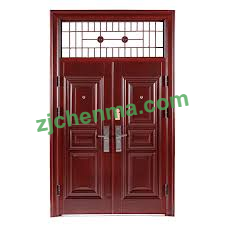
The entry point of any building carries responsibilities beyond aesthetics. An exterior door serves as a barrier against weather, intruders, and fire. It must open and close reliably for decades. It must accommodate people of all abilities. These functional demands translate into technical standards that vary by country, region, and application. For buyers sourcing from China, understanding which safety rules apply to a China Exterior Door is not optional; it is essential. Manufacturers like Zjchenma navigate this complex regulatory landscape daily. Their experience helps clients avoid costly compliance errors. But with multiple national standards and international certifications in play, which requirements actually govern your specific order?
Domestic Chinese standards form the foundation for any China Exterior Door intended for local construction projects. The national mandatory standard GB 55038-2025 Residential Project Specification establishes baseline requirements that directly affect door design and performance. This regulation specifies that exterior windows must have a design working life of no less than 25 years, with secure installation to prevent falling. For doors, the standard mandates a clear opening width of at least 0.90 meters for new residential buildings and 0.80 meters for renovation projects. These dimensional requirements ensure accessibility for furniture movement and accommodate individuals with mobility needs. The standard also addresses thresholds: the maximum height for entrance door thresholds is 15mm, with sloped transitions required when exceeding 10mm. These details reflect China's growing emphasis on universal design and aging-friendly construction.
Fire safety represents another critical dimension of domestic compliance. The GB 50016 Code for Fire Protection Design of Buildings mandates that exterior doors and windows on certain buildings must achieve specific fire resistance ratings-6. For residential buildings exceeding 54 meters in height, exterior windows serving refuge rooms must maintain integrity for at least 1.0 hour under fire exposure-6. When external insulation systems use combustible materials, exterior doors and windows may require a 0.5-hour fire integrity rating-6. These requirements differ fundamentally from fire-rated doors used internally. Fire-rated doors typically demand both integrity and insulation, while fire-resistant exterior doors primarily need to prevent flame spread from external sources-11. The application context changes everything. A door that meets internal fire door standards may not satisfy exterior fire resistance requirements, and vice versa.
The domestic standard GB/T 29498-2024 General Technical Requirements for Wood Doors and Windows adds material-specific provisions-5. This standard covers classification, testing methods, inspection rules, packaging, and installation guidelines for wood entrance products. It applies to design, manufacturing, and installation processes-10. Notably, this standard excludes fire doors, escape doors, and smoke exhaust windows, indicating that specialized products require separate compliance frameworks. For steel or aluminum doors, other national standards apply, such as GB/T 20909 for steel doors and GB/T 8478 for aluminum doors-8. The diversity of applicable standards means that a China Exterior Door must meet the specific standard relevant to its material composition and intended use.
Export markets introduce additional compliance layers. European buyers expect CE marking, which requires conformity with EU construction product regulations-4. North American projects often demand NAFS (North American Fenestration Standard) certification for weather resistance, ANSI/BHMA standards for forced entry resistance, and specific thermal performance metrics measured by U-factor-4. The UK market requires UKCA marking and compliance with Part L building regulations for energy efficiency-4. Middle Eastern clients prioritize sandstorm resistance and solar heat gain coefficient optimization-4. Each market's regulatory framework reflects its climate conditions, building practices, and safety priorities. A door designed for Northern Europe's cold climate will fail in the Middle East's heat and dust, regardless of its quality.
The logistical requirements for international shipping further complicate compliance. Exporting China Exterior Door products requires accurate HS code classification. Steel doors fall under HS code 7308300000, while plastic doors use code 3925200000-1-9. These classifications determine applicable tariffs, customs documentation, and inspection requirements. The “A” customs code indicates the need for an import declaration, while “B” signifies an export declaration-1. Proper classification is not administrative paperwork; it directly impacts cost, delivery timing, and legal clearance at borders. An experienced supplier like Zjchenma assists clients in navigating these logistical compliance aspects, reducing the risk of shipment delays or penalties.
For buyers evaluating potential partners, assessing a supplier's compliance capability requires due diligence. ISO 9001 certification indicates a quality management system-4. Material traceability, third-party lab reports, and demonstrated experience with specific target markets signal a supplier's regulatory competence-4. A manufacturer that can provide mill test certificates, fire rating documentation, and energy efficiency data shows readiness for international scrutiny. They understand that a China Exterior Door is not a generic product but a regulated building component. The presence of over 400 patented technologies at Zjchenma suggests an engineering-driven approach to quality and innovation-3. This depth of technical resources supports both standard compliance and custom requirements for specialized projects.
Regulatory landscapes evolve constantly. New standards like T/CECS 1904-2025 Technical Specification for Fire Prevention Engineering of Building Doors and Windows introduce fresh requirements for design, installation, and maintenance of fire-resistant doors-2. The GB/T 29498 standard for wood doors was recently updated, with the 2024 version replacing the 2013 edition and taking effect in May 2025-5. Staying current with these changes is challenging for any manufacturer, let alone international buyers. A supplier who actively participates in standard development, maintains current certifications, and updates products accordingly provides significant value. They reduce the risk of buying non-compliant inventory. They protect their clients from regulatory enforcement actions. This approach builds long-term relationships based on trust and demonstrated reliability.
The investment in compliant China Exterior Door products ultimately protects building owners, occupants, and project investors. Non-compliant doors can lead to failed inspections, costly replacements, and legal liability in case of fire or injury. Understanding the standards applicable to your project—whether domestic or export—is a fundamental procurement responsibility. The right supplier will not only meet these standards but will explain them clearly, document compliance transparently, and offer solutions for special requirements. Detailed product information, compliance documentation, and customization options are accessible through the manufacturer's platform. You may review materials, configurations, and performance data at https://www.kst-motorfactory.com/product/ to verify alignment with your project's regulatory needs. The selection of a compliant entrance door influences safety, durability, and legal risk. Does your supplier selection process adequately address the full spectrum of applicable standards for your target market?
