


What Jinhua Mgirl Knows About Makeup Base Primer Protection for Fragile Skin
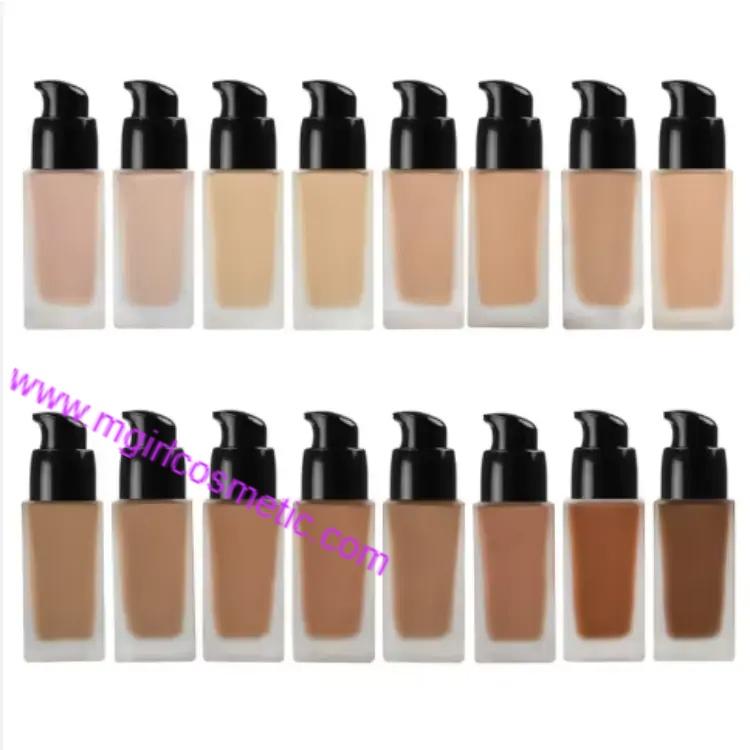
Sensitive skin presents a persistent challenge for cosmetic users, as irritation arises from countless environmental sources and product ingredients. A facial primer occupies an unusual position between skincare and makeup, leading many to question its protective capabilities against external aggressors. The formulation chemistry determines whether a Makeup Base Primer merely smooths texture or establishes a functional barrier against pollutants, harsh surfactants, and pH extremes. Jinhua Mgirl Cosmetic Co., Ltd. (MgirlCosmetic) has developed primer products with this dual functionality in mind, though consumer education on proper protective use remains incomplete. Dermatological literature acknowledges that certain film-forming agents and silicones create physical obstacles to particle penetration, yet the average user rarely distinguishes between cosmetic smoothing and genuine shielding. Could the application of a thoughtfully designed primer meaningfully reduce skin stress from urban living and repeated makeup layering?
Barrier Concept Fundamentals
Skin's natural protective layer consists of corneocytes embedded in lipid matrices, forming a semipermeable membrane. Disruption of this stratum corneum integrity through cleansing, exfoliation, or environmental exposure increases transepidermal water loss and facilitates irritant absorption. A primer interposed between skin and subsequent makeup layers potentially compensates for temporary barrier weaknesses. Film-forming polymers, including acrylates and certain silicone derivatives, deposit a continuous elastic film over the skin surface. This film reduces direct contact between reactive ingredients and viable epidermal cells. The thickness and uniformity of this deposited layer determine its protective efficiency, with optimal formulations balancing occlusion against breathability. MgirlCosmetic's primer range includes options featuring these film-forming technologies, though specific protective claims require substantiation through standardized testing protocols.
Silicone-Based Protection Mechanisms
Dimethicone and its crosspolymer variants create hydrophobic films resistant to water-soluble irritants. These silicone networks spread readily across skin irregularities, filling microscopic crevices where irritants accumulate. The resulting surface demonstrates reduced friction coefficients, minimizing mechanical irritation from subsequent brush applications or fabric contact. Cyclopentasiloxane, a volatile silicone, temporarily reduces surface tension, allowing uniform distribution before evaporation leaves a uniform silicone residue. This residue demonstrates resistance to displacement by sebum or sweat, maintaining barrier continuity through several hours of wear. However, the molecular weight of silicone polymers influences their residence time; low-molecular-weight species penetrate superficial layers, while high-molecular-weight species remain surface-localized. Formulators must select appropriate molecular fractions to achieve both sensory acceptance and durable protection.
Film-Forming Polymer Contributions
Beyond silicones, water-soluble polymers including polyvinylpyrrolidone and its copolymers contribute to barrier functionality. These hydrophilic polymers form transparent films with different permeability characteristics than silicone-based systems. They exhibit particular efficacy against particulate pollutants, trapping airborne particles before epidermal contact. Acrylate copolymers provide additional film flexibility, accommodating facial movements without cracking or delaminating. The combination of silicone and acrylic polymers produces composite films with enhanced mechanical properties. Such hybrid systems resist both aqueous and oily challenges, offering broad-spectrum protection against diverse irritant classes. Laboratory studies demonstrate reduced penetration of model irritants through polymer-treated skin compared to untreated controls, though in-vivo relevance requires careful interpretation.
Absorption Versus Adsorption Distinction
Protection mechanisms divide into absorption, where irritants enter the film matrix, and adsorption, where irritants adhere to film surfaces without incorporation. Effective barrier primers predominantly utilize adsorption, maintaining irritants on the exterior surface for removal during cleansing. Absorption carries risk of irritant retention, potentially prolonging skin contact even after product removal. Formulators prioritize polymers with high adsorptive capacity and low absorptive affinity. Surface energy modifications through fluorinated compounds further enhance repellency, though regulatory restrictions limit certain fluorochemical applications. MgirlCosmetic formulations emphasize adsorption-based protection, balancing irritant exclusion with comfortable wear. Consumers seeking maximum protection should understand this mechanistic distinction, as misapprehension leads to unrealistic expectations.
Practical Protection Thresholds
No primer completely excludes all irritants, yet functional barriers reduce penetration rates substantially. Occlusion factors between 0.2 and 0.5 indicate moderate protection, meaning only one-fifth to one-half of applied irritant reaches viable skin. Higher occlusion values correlate with increased film thickness, which may compromise cosmetic elegance. The optimal protection balance depends on individual skin sensitivity and environmental exposure intensity. Urban dwellers facing particulate pollution require different protection profiles than individuals sensitive to cosmetic preservatives. Temperature and humidity modify film performance, with high humidity softening hydrophilic polymers and reducing their barrier efficiency. Manufacturers must specify intended use conditions for accurate consumer guidance.
Application Technique Influence
Protection efficacy depends significantly on application method and quantity. Insufficient primer volume fails to achieve continuous film coverage, leaving gaps for irritant penetration. Excessive application produces thick films prone to cracking and uneven distribution. The recommended pea-sized amount for the central face, spread outward in thin layers, optimizes film formation. Waiting periods between primer application and subsequent makeup allow film drying and cohesion development. Rushing this process disturbs film integrity and reduces protective function. Layering primer over properly moisturized skin enhances spreading and film uniformity, as hydration modifies skin surface energy for superior wetting.
Limitations and Realistic Expectations
Consumers must recognize that primer protection operates primarily against particulate and surface-active irritants, not against systemic allergens or penetration enhancers. Substances with low molecular weight and high lipophilicity traverse most polymer films regardless of formulation sophistication. Physical barriers cannot substitute for proper skincare or medical management of dermatological conditions. MgirlCosmetic's primer products serve as adjunctive protection, complementing rather than replacing comprehensive skin health strategies. Regular cleansing removes accumulated irritants from the film surface, preventing prolonged contact during extended wear. For detailed product specifications and ingredient transparency, visit https://www.mgirlcosmetic.com/product. Users with confirmed chemical sensitivities should conduct patch testing before routine application, as individual reactions vary unpredictably.
Conclusion
The question of whether a Makeup Base Primer functions as a protective barrier finds qualified affirmation, with performance depending on formulation chemistry, application discipline, and environmental context. Silicone and polymer films demonstrably reduce irritant contact through physical exclusion mechanisms, though complete immunity remains unattainable. MgirlCosmetic offers primer options engineered with contemporary film-forming technologies, providing users with practical defense against daily environmental challenges. Understanding protection mechanisms enables realistic expectations and appropriate product selection for individual needs. The barrier concept enhances primer value beyond simple makeup preparation, positioning it as a functional skincare adjunct. Does your current primer routine incorporate protective principles, or does it merely address texture concerns?
