Finance and technology are increasingly connected, creating new opportunities for professionals who understand financial services, regulatory responsibilities and financial crime prevention. As digital payments, online investment platforms and technology-driven banking continue to evolve, knowledge of financial regulation and compliance is becoming an important part of professional development.
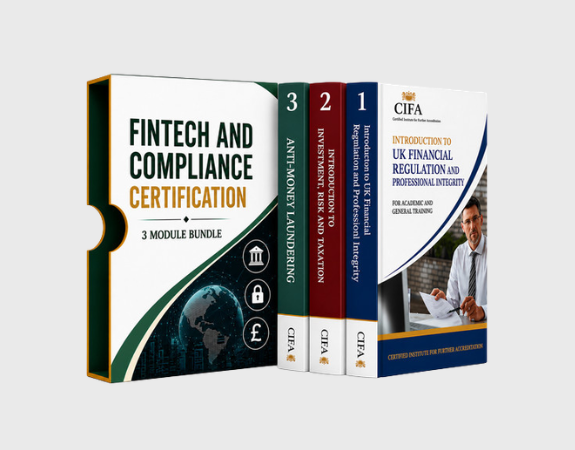
The FinTech and Compliance Certification (FCC) from CIFA offers a structured learning pathway that brings together three important areas: UK financial regulation and professional integrity, investment, risk and taxation, and anti-money laundering.
This combination helps learners develop a broader understanding of how modern financial services operate. Rather than focusing on one specialist subject, the programme introduces the regulatory principles, investment concepts and compliance practices that influence financial institutions and their daily operations.
The financial regulation module introduces the importance of professional conduct, consumer protection and ethical decision-making. The investment, risk and taxation module explores how financial products, investment risks and taxation considerations influence financial decisions. The anti-money laundering component introduces key concepts such as Know Your Customer (KYC), customer due diligence (CDD), sanctions compliance, risk-based controls and suspicious activity reporting.
Together, these subjects provide a foundation for understanding why financial institutions must balance innovation with accountability. They can also help learners become familiar with the terminology and responsibilities associated with financial compliance and operations.
The FCC certification may interest graduates, beginners exploring financial services, career changers and existing professionals who want to broaden their financial knowledge. Depending on previous experience and additional skills, relevant entry-level career paths may include compliance assistant, KYC administrator, AML operations assistant, financial services administrator and risk support assistant.
However, a certification alone does not guarantee employment or provide automatic authorisation to perform regulated activities. Practical experience, further qualifications and employer-specific requirements may also be necessary.
Learners can make their studies more valuable by connecting course concepts with real workplace responsibilities, researching relevant vacancies and identifying additional skills that employers request. This approach helps turn foundational knowledge into a more focused professional development plan.
If you want to explore the programme, review the [FinTech and Compliance Certification (FCC)](https://cifa.ac/home/bundle/FinTech-and-Compliance-Certification-FCC/16) course details, including the learning content, assessment arrangements and current costs. You can also visit [CIFA](https://cifa.ac/) to explore its wider range of financial training programmes.
As financial services continue to change, understanding both financial principles and compliance responsibilities can provide a useful starting point for further learning. The strongest professional development combines structured education with practical experience, continuous improvement and responsible judgement.
#FinTechCertification #FCCCertification #FinancialCompliance #AntiMoneyLaundering #CIFACareers
Finance and technology are increasingly connected, creating new opportunities for professionals who understand financial services, regulatory responsibilities and financial crime prevention. As digital payments, online investment platforms and technology-driven banking continue to evolve, knowledge of financial regulation and compliance is becoming an important part of professional development.
The FinTech and Compliance Certification (FCC) from CIFA offers a structured learning pathway that brings together three important areas: UK financial regulation and professional integrity, investment, risk and taxation, and anti-money laundering.
This combination helps learners develop a broader understanding of how modern financial services operate. Rather than focusing on one specialist subject, the programme introduces the regulatory principles, investment concepts and compliance practices that influence financial institutions and their daily operations.
The financial regulation module introduces the importance of professional conduct, consumer protection and ethical decision-making. The investment, risk and taxation module explores how financial products, investment risks and taxation considerations influence financial decisions. The anti-money laundering component introduces key concepts such as Know Your Customer (KYC), customer due diligence (CDD), sanctions compliance, risk-based controls and suspicious activity reporting.
Together, these subjects provide a foundation for understanding why financial institutions must balance innovation with accountability. They can also help learners become familiar with the terminology and responsibilities associated with financial compliance and operations.
The FCC certification may interest graduates, beginners exploring financial services, career changers and existing professionals who want to broaden their financial knowledge. Depending on previous experience and additional skills, relevant entry-level career paths may include compliance assistant, KYC administrator, AML operations assistant, financial services administrator and risk support assistant.
However, a certification alone does not guarantee employment or provide automatic authorisation to perform regulated activities. Practical experience, further qualifications and employer-specific requirements may also be necessary.
Learners can make their studies more valuable by connecting course concepts with real workplace responsibilities, researching relevant vacancies and identifying additional skills that employers request. This approach helps turn foundational knowledge into a more focused professional development plan.
If you want to explore the programme, review the [FinTech and Compliance Certification (FCC)](https://cifa.ac/home/bundle/FinTech-and-Compliance-Certification-FCC/16) course details, including the learning content, assessment arrangements and current costs. You can also visit [CIFA](https://cifa.ac/) to explore its wider range of financial training programmes.
As financial services continue to change, understanding both financial principles and compliance responsibilities can provide a useful starting point for further learning. The strongest professional development combines structured education with practical experience, continuous improvement and responsible judgement.
#FinTechCertification #FCCCertification #FinancialCompliance #AntiMoneyLaundering #CIFACareers