


What to Consider When Choosing a Compact Electronic Device for Travel
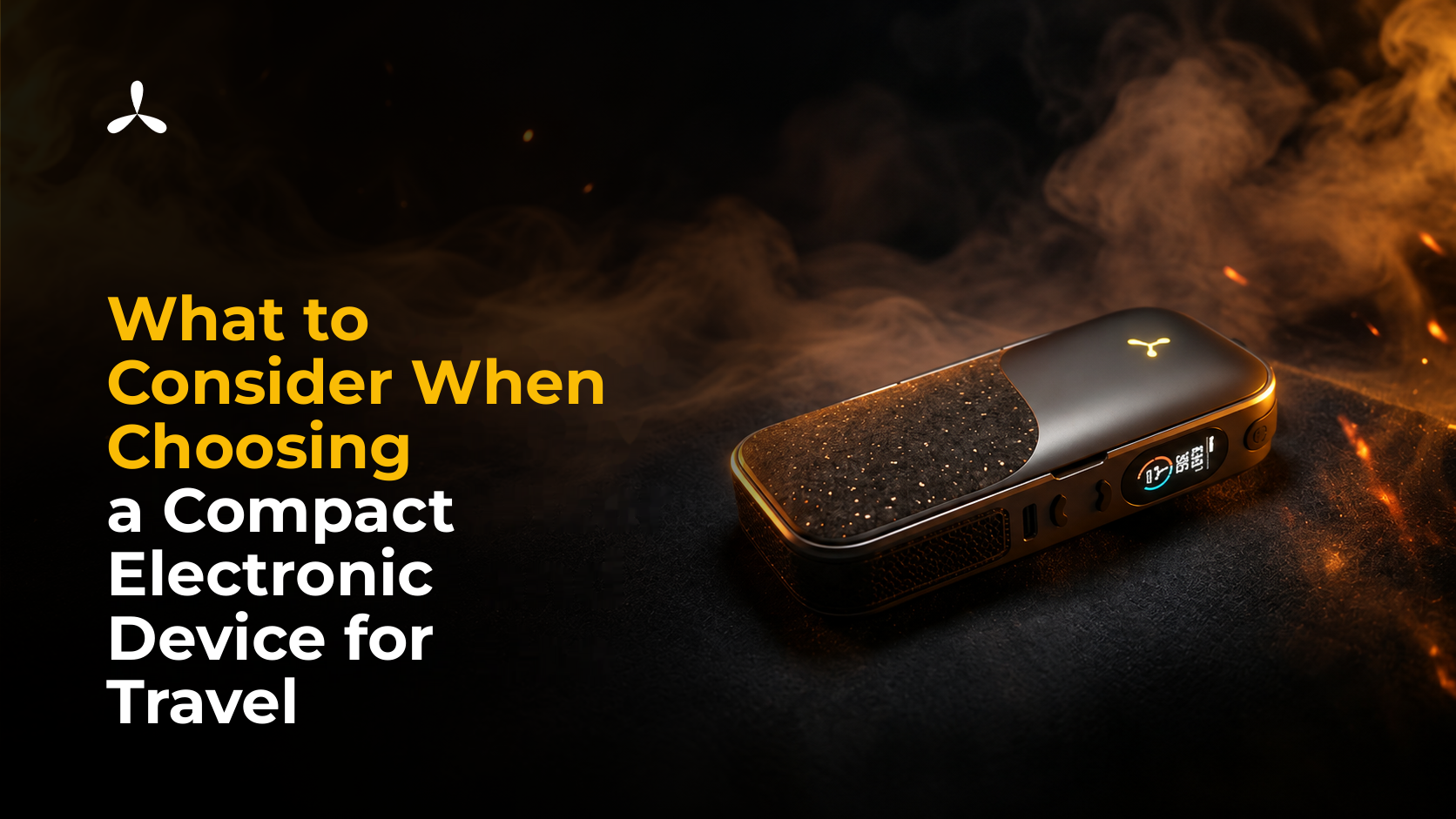
Travelling with electronic devices has become a natural part of modern life. Whether heading away for a weekend, planning an extended holiday or travelling for business, people increasingly prefer technology that combines functionality with convenience.
However, not every compact electronic device is designed with travel in mind. A smaller size does not necessarily guarantee better portability, reliable battery performance or practical functionality.
Factors such as construction materials, charging compatibility, control systems and maintenance requirements can significantly influence the overall ownership experience.
Understanding these considerations can help adult consumers make more informed decisions when evaluating portable electronics.
1. Prioritise Size and Weight
One of the most important factors when selecting a travel-friendly electronic device is its physical size. A compact design makes it easier to organise personal belongings without adding unnecessary bulk to luggage.
Weight is equally important, particularly when travelling with limited baggage space. A device should offer a reasonable balance between portability, functionality and structural durability.
When evaluating device dimensions, consider:
-
Overall height, width and thickness.
-
Total weight, including accessories.
-
Space required for charging equipment.
-
Storage and protective case requirements.
-
Ergonomic design and handling comfort.
A slim profile may be more practical than a shorter but thicker construction. The overall shape of a device often matters just as much as its dimensions.
2. Evaluate Battery Performance
Battery performance is an essential consideration for rechargeable electronic devices, particularly when access to electrical outlets may be limited.
Although battery capacity is commonly measured in milliampere-hours (mAh), this measurement alone does not determine operating time. Energy consumption, component efficiency, operating settings and environmental conditions can all affect battery performance.
Important battery-related considerations include battery capacity, charging duration, battery level indicators, power management systems and manufacturer-supported battery replacement.
Devices with clear battery indicators allow users to monitor remaining power more easily. Automatic shutdown functionality can also help prevent unnecessary energy consumption when a device is inactive.
A well-designed electronic device should balance power requirements with its available battery capacity.
3. Check Charging Compatibility
Modern travellers often carry multiple rechargeable devices, including smartphones, tablets, headphones and other personal electronics.
Charging compatibility can simplify how these devices are managed.
USB-C has become increasingly common across modern electronics because of its reversible connector and broad compatibility. However, devices using the same connector may still have different voltage, current and power requirements.
Before travelling, check the following:
-
Manufacturer-recommended charging cables.
-
Supported charging voltage and current.
-
Compatibility with international power adapters.
-
Charging port condition and accessibility.
-
Manufacturer instructions regarding external power sources.
Using a compatible charger is important for maintaining battery performance and protecting electronic components.
4. Consider Construction Materials and Durability
Electronic devices may encounter more frequent handling, movement and environmental changes during travel.
Construction quality therefore plays an important role in long-term reliability.
Manufacturers commonly use materials such as aluminium, engineered plastics, stainless steel, glass and protective surface finishes. Each material has different properties relating to weight, mechanical strength, temperature resistance and durability.
Aluminium, for example, offers a useful balance between rigidity and weight. Engineered plastics can reduce overall weight, while glass components may require additional protection against impacts.
Consumers should examine how different materials are incorporated into the overall construction rather than judging quality based on a single material.
Secure component connections, consistent surface finishes and properly fitted external panels can also contribute to structural integrity.
5. Look for Practical and Intuitive Controls
Compact electronic devices often have limited space for buttons, displays and other interface components.
An intuitive control system can make a device easier to understand and manage without unnecessary complexity.
Some manufacturers incorporate digital displays and adjustable settings, while others adopt minimalist interfaces with fewer physical controls.
Neither approach is inherently superior. The appropriate interface depends on individual preferences and the intended function of the device.
Useful interface characteristics include readable indicators, responsive buttons, clear operating instructions and understandable status notifications.
AirVape's product design philosophy reflects the broader industry approach of combining compact electronic architecture with different levels of user interaction and control.
6. Understand Maintenance Requirements
Maintenance is an important but frequently overlooked aspect of portable electronic ownership.
Dust, debris, moisture and repeated handling can gradually affect external surfaces, charging ports and removable components.
Devices with accessible components may be easier to inspect and maintain according to manufacturer instructions.
Before selecting an electronic device, consumers should consider whether replacement components are available, whether maintenance instructions are clearly documented and whether specialised tools are required.
Regular inspection can help identify loose connections, damaged components, worn seals or unusual battery behaviour before these issues develop further.
Electronic components should never be exposed to cleaning liquids unless the manufacturer explicitly permits it.
7. Assess Resistance to Environmental Conditions
Travelling often involves moving between environments with different temperatures, humidity levels and storage conditions.
Electronic devices and rechargeable batteries can be sensitive to these changes.
Excessive heat may accelerate battery degradation, while condensation can introduce moisture around electrical contacts and internal components.
Cold temperatures may temporarily affect battery performance and operating efficiency.
Consumers should review the manufacturer's recommended operating and storage temperatures. Unless a device has a verified water-resistance rating, it should not be assumed to offer protection against water exposure.
Keeping electronics away from direct sunlight, excessive moisture and extreme temperatures is an important part of responsible device ownership.
8. Review Travel Regulations and Battery Restrictions
Not every electronic device can be transported under the same conditions.
Airlines, airports and national authorities may impose specific requirements on rechargeable electronics, lithium-ion batteries and electronic vaporizing devices.
Regulations can vary between European countries and international destinations.
Before departure, travellers should verify:
-
Airline restrictions on electronic devices.
-
Carry-on and checked baggage requirements.
-
Lithium-ion battery transportation rules.
-
Destination and transit country regulations.
-
Restrictions on device possession and use.
Electronic vaporizing devices may be subject to additional legal restrictions. Where their transportation is permitted, aviation rules generally require them to be carried in cabin baggage rather than checked luggage, with protection against accidental activation.
Always consult official airline instructions and relevant aviation authorities before travelling.
9. Consider Build Quality and Component Integration
The internal architecture of a compact electronic device can be just as important as its external appearance.
Manufacturers must accommodate batteries, electrical circuits, control interfaces and functional components within a limited physical space.
Effective component integration requires careful consideration of thermal management, electrical insulation, structural stability and energy distribution.
Poor component arrangement may contribute to excessive heat, inconsistent performance or difficult maintenance.
Modern electronic engineering therefore focuses on achieving a functional balance between compact dimensions and dependable construction.
Understanding these design principles helps consumers appreciate why two similarly sized devices may differ considerably in their overall quality.
10. Check Manufacturer Support and Documentation
A reliable manufacturer should provide clear information about product specifications, operating instructions, maintenance procedures and warranty conditions.
This becomes particularly important when purchasing electronic devices online.
Consumers should review product documentation and understand what support is available if a component becomes damaged or develops a fault.
Replacement component availability can also influence the long-term serviceability of an electronic product.
The official AirVape Europe website serves as a brand-specific reference for product information, documentation and applicable policies.
Checking official product information is generally more reliable than relying exclusively on third-party descriptions.
11. Balance Portability With Functionality
Reducing the size of an electronic device often involves engineering compromises.
A smaller enclosure may limit battery capacity, component accessibility or available interface space. Conversely, a larger enclosure may accommodate additional functionality but increase overall weight.
|
Design factor |
Important consideration |
|
Size |
Storage and portability |
|
Weight |
Handling and transportation |
|
Battery |
Capacity and energy management |
|
Charging |
Electrical compatibility |
|
Materials |
Durability and structural integrity |
|
Controls |
Interface accessibility |
|
Maintenance |
Component inspection and servicing |
|
Regulations |
Legal transportation requirements |
|
Support |
Documentation and warranty conditions |
A balanced design considers these factors together rather than concentrating exclusively on physical size.
Conclusion
Choosing a compact electronic device for travel requires more than selecting the smallest or lightest available option.
Battery performance, charging compatibility, construction materials, environmental resistance, maintenance requirements and regulatory compliance all contribute to the overall practicality of portable electronics.
Modern brands such as AirVape operate within an evolving electronic design landscape where compact construction, material selection and functional integration remain important engineering considerations.
By reviewing manufacturer specifications, understanding transportation restrictions and evaluating long-term maintenance requirements, consumers can make better-informed decisions about electronic devices.
Ultimately, thoughtful engineering and responsible ownership matter just as much as portability.
