


How Retrieval-Augmented Generation Improves AI Applications
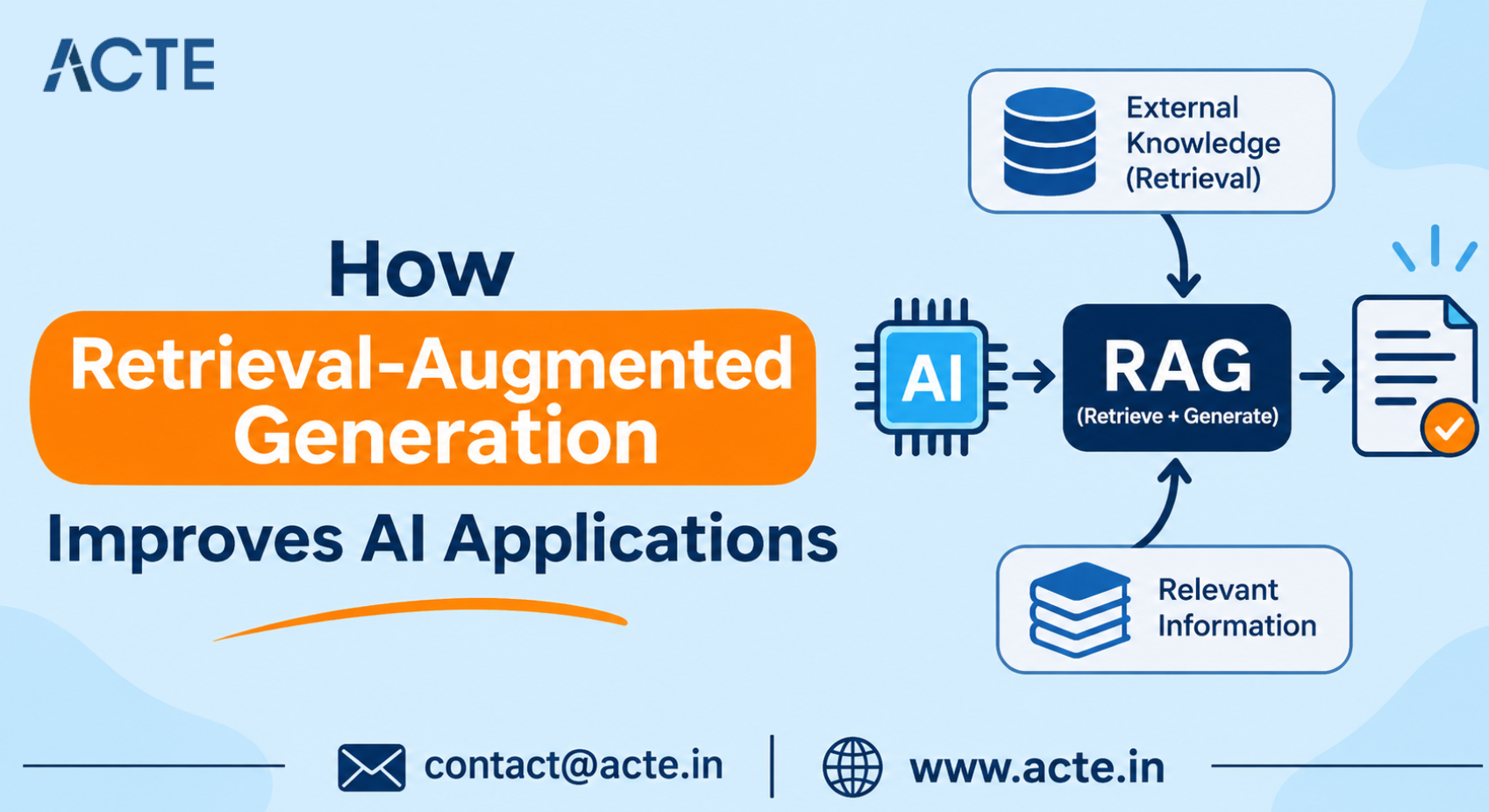
Artificial Intelligence is transforming the way businesses access information, automate tasks, and interact with customers. However, traditional AI models sometimes struggle to provide accurate and updated answers because they rely mainly on information learned during training. Retrieval-Augmented Generation (RAG) addresses this limitation by combining information retrieval techniques with Gen AI Course in Chennai capabilities. It allows AI applications to access relevant external information before generating responses. As a result, businesses can develop more reliable, informative, and context-aware AI solutions.
1. Understanding Retrieval-Augmented Generation
Retrieval-Augmented Generation is an AI approach that connects large language models with external knowledge sources such as databases, company documents, websites, and knowledge repositories. Instead of depending entirely on previously learned information, the system retrieves relevant content based on the user's question and uses it to generate an appropriate response. The RAG process generally involves three stages: retrieving relevant information, providing the retrieved content to the language model, and generating a response using that context. This approach helps AI applications deliver answers that are more relevant to specific business requirements.
2. Improving the Accuracy of AI Responses
One of the major advantages of RAG is its ability to improve response accuracy. Traditional language models can sometimes generate incorrect information or produce answers that sound convincing but lack factual support. RAG reduces this problem by retrieving relevant information from trusted sources before generating a response. For example, a customer support chatbot can access the latest product documentation to answer questions about features, pricing, and troubleshooting. This Gen AI Course in Bangalore allows businesses to provide more dependable information while reducing the possibility of misleading responses.
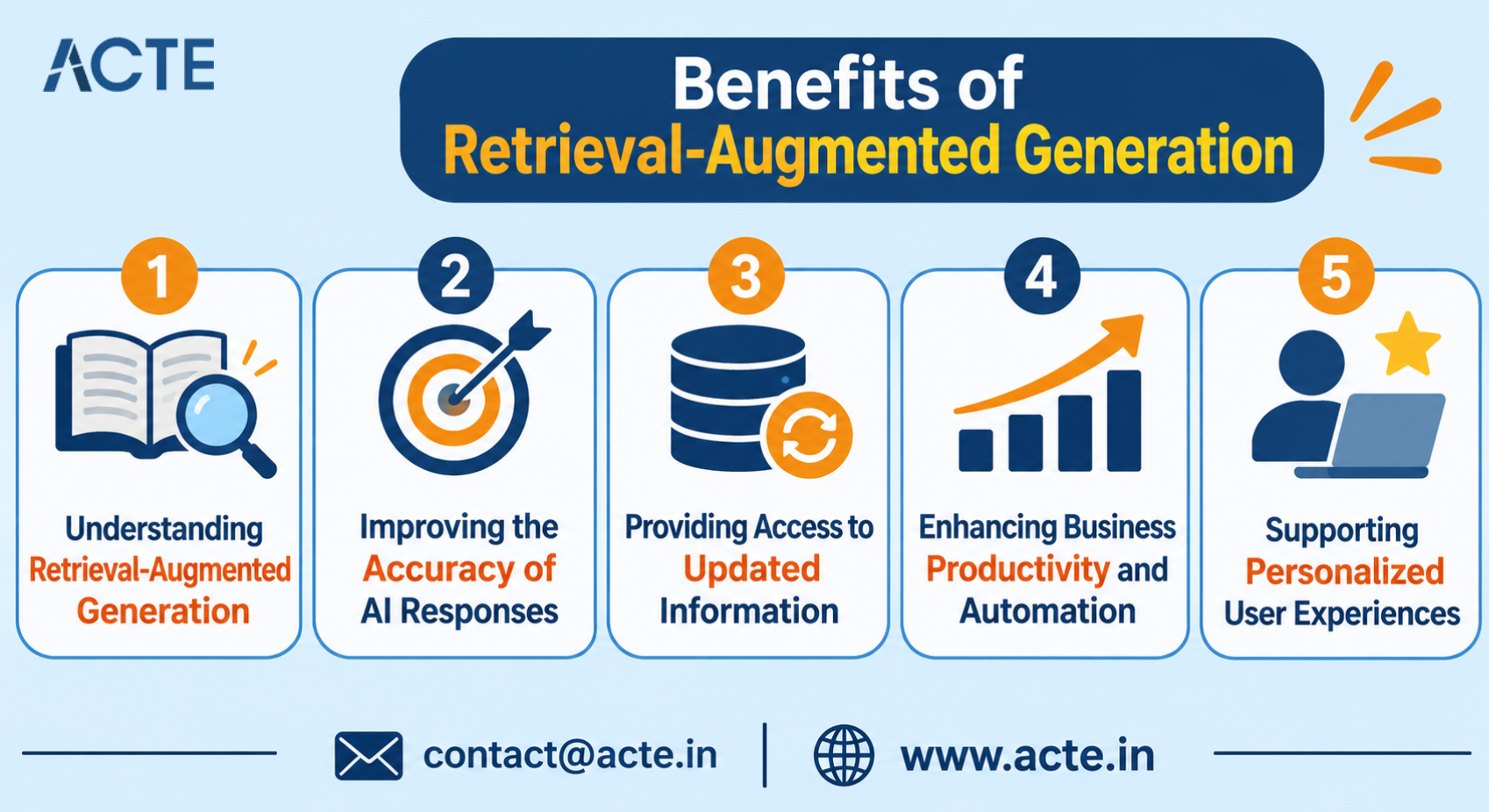
3. Providing Access to Updated Information
AI models may not always contain the latest information because their training data has a specific knowledge cutoff. RAG helps overcome this limitation by connecting AI applications to external information sources that can be updated regularly. Businesses can add new documents, policies, product details, and technical information to their knowledge repositories without retraining the entire language model. This Gen AI Course in Hyderabad makes RAG particularly useful in industries where information changes frequently, including finance, healthcare, education, and technology.
4. Enhancing Business Productivity and Automation
RAG improves business productivity by helping employees find relevant information quickly. Organizations can develop intelligent assistants that search internal documents, retrieve company policies, and provide answers based on organizational knowledge. For instance, HR teams can use RAG-powered applications to answer employee questions about leave policies, benefits, and workplace guidelines. Similarly, technical teams can retrieve troubleshooting instructions and project documentation without manually searching through multiple files. These capabilities reduce repetitive work and allow employees to focus on more important responsibilities.
5. Supporting Personalized User Experiences
Another important benefit of RAG is its ability to generate responses based on specific user requirements. By retrieving Gen AI Online Course information relevant to individual queries, AI applications can provide more contextual and personalized interactions. E-commerce platforms can use RAG to recommend products based on customer questions, while educational applications can retrieve suitable learning materials based on students' topics of interest. This improves user engagement and makes AI-powered services more useful.
Conclusion
Retrieval-Augmented Generation is improving AI applications by combining the knowledge retrieval capabilities of information systems with the content generation abilities of large language models. It supports accurate responses, updated information, business automation, and personalized user experiences. As organizations continue adopting generative AI, RAG will become an important approach for developing practical, reliable, and knowledge-driven applications.
