


Why Ship Maintenance Records Matter After an Accident
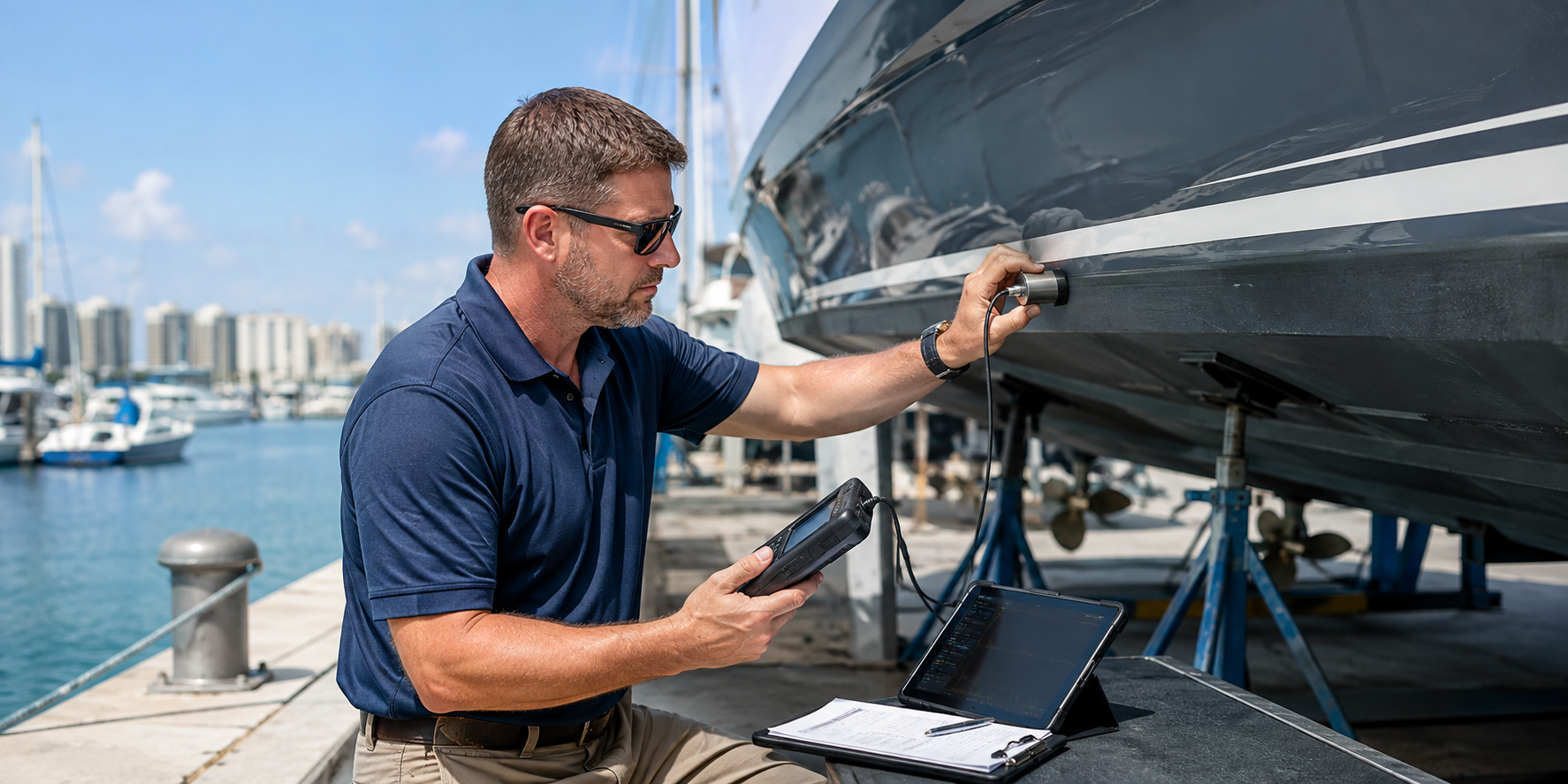
When a vessel is involved in an accident, attention naturally turns to the visible evidence. Investigators may examine damaged structures, machinery, navigation equipment, control systems, and the surrounding environment. These physical clues can reveal important details, but they rarely tell the entire story.
A ship's maintenance history can provide the background needed to understand what happened before the accident. Records can show when equipment was inspected, what repairs were performed, which components had recurring problems, and whether a particular system had recently been serviced.
This makes maintenance documentation an important part of a broader marine accident investigation.
Maintenance Records Show What Happened Before the Accident
A damaged component tells investigators what it looks like after an event. A maintenance record can help establish what condition that component was in before the event.
Depending on the vessel and the investigation, relevant records may include:
- Scheduled maintenance reports
- Repair invoices and work orders
- Inspection reports
- Machinery service records
- Equipment replacement records
- Defect reports
- Engine-room logs
- Alarm records
- Manufacturer service documentation
- Previous survey reports
- Parts and component histories
These documents can help establish a timeline.
For example, suppose a vessel experiences a propulsion problem shortly before a collision. An examination of the propulsion system might identify a damaged component. That finding alone does not establish whether the component failed before the collision, during the event, or because of the collision.
Earlier maintenance documentation may show whether the component had recently been repaired, replaced, inspected, or reported as defective.
The records do not automatically provide the answer, but they can help investigators ask more precise questions.
Records Help Establish Equipment History
Most vessel systems do not exist in isolation. Engines, steering systems, generators, pumps, electrical equipment, navigation systems, and other machinery have operating histories.
A recurring equipment problem may appear in maintenance records long before a serious incident occurs.
For example, repeated entries concerning overheating, unusual vibration, electrical faults, leakage, or intermittent alarms may become relevant when investigating a later accident involving the same system.
This does not mean that a previous maintenance issue caused the accident. Instead, the historical record provides context that can be compared with physical evidence and other information.
The distinction is important. An investigation should connect documented evidence rather than assume that an earlier defect automatically explains a later event.
Maintenance History Can Help Build a Timeline
Accident investigations often depend on timing.
Investigators may need to determine what equipment was operating, what maintenance had recently taken place, when a defect was reported, and what happened immediately before the accident.
Maintenance records can help establish those sequences.
Imagine that a vessel underwent work on an electrical distribution system shortly before an incident involving loss of power. The maintenance documentation may identify the equipment worked on, the nature of the work, the date of the work, and any testing performed afterward.
That information can then be compared with:
- Alarm and event logs
- Voyage data
- Crew statements
- Physical inspection findings
- Electrical test results
- Machinery condition
- Weather and operating conditions
When several independent sources point to the same sequence, investigators can develop a more complete understanding of the event.
The Importance of Looking Beyond the Most Recent Repair
One common mistake in accident analysis is focusing only on the last maintenance activity.
A vessel's condition may be influenced by years of operation. Earlier repairs, component replacements, modifications, recurring defects, and inspection findings can sometimes provide useful context.
A maintenance history may reveal patterns such as repeated repairs to the same system or replacement of similar components over time.
However, patterns still need to be interpreted carefully. Repeated maintenance does not necessarily demonstrate negligence or establish a causal connection to an accident. The technical condition of the equipment, operating environment, repair quality, and other evidence must be considered.
This is where documentation becomes most useful when combined with physical and technical investigation.
Comparing Records With Physical Evidence
Documents are only one part of an accident investigation.
If maintenance records indicate that a component was recently replaced, investigators may examine the actual component, installation, surrounding equipment, and available testing records. If records indicate that a system was functioning properly shortly before an accident, that information can be compared with electronic logs and physical evidence.
The goal is not simply to collect paperwork. It is to compare different forms of evidence.
For example:
Maintenance record: A steering component was serviced.
Operational record: The steering system was reportedly functioning before the incident.
Accident data: A steering response changed shortly before impact.
Physical examination: A particular component shows damage.
Taken together, these observations create questions for further technical analysis. They do not, by themselves, establish the cause of the accident.
This approach is especially important when investigators need to distinguish between a pre-existing condition and damage caused by the accident itself.
When Maintenance Records Are Incomplete
Not every investigation has a perfect documentary record.
Older vessels may have paper-based records, while newer vessels may rely heavily on electronic maintenance systems. Some documentation may be stored by contractors, ship managers, owners, operators, or equipment manufacturers.
Records can also contain gaps, inconsistent descriptions, missing attachments, or different terminology for the same component.
An incomplete record should not automatically be treated as proof that maintenance did not occur.
Instead, investigators can compare available documentation with other evidence, including invoices, purchase records, crew interviews, inspection findings, electronic logs, photographs, and equipment condition.
The absence of a particular document is itself a fact, but its significance depends on the circumstances and the rest of the evidence.
Preserving Maintenance Records After an Accident
After an accident, relevant records should be preserved rather than altered, discarded, or casually replaced with reconstructed information.
This can include electronic maintenance databases, work orders, inspection reports, photographs, service correspondence, equipment manuals, and related documentation.
Preserving the original information helps maintain the integrity of the investigative process.
Where electronic systems are involved, investigators may also need to consider timestamps, system-generated entries, revisions, backups, and other metadata. The precise approach depends on the system and the nature of the investigation.
For anyone trying to understand maintenance records in the context of a marine accident, the key point is that documentation should be evaluated alongside physical and operational evidence rather than treated as a standalone explanation.
Maintenance Records Can Reveal More Than Repairs
Maintenance documentation is sometimes viewed simply as proof that a repair was completed. Its investigative value can be broader.
Records may help establish:
- How frequently equipment required attention
- Whether a component had a known history of problems
- When inspections occurred
- What parts were replaced
- Whether modifications were made
- What testing followed a repair
- Whether a system had been subject to recurring alarms or defects
This information can help reconstruct the vessel's technical history.
For complex accidents, that history may be important when determining which questions deserve further examination.
A Complete Investigation Uses Multiple Evidence Sources
No single document should normally be expected to explain a marine accident.
A useful investigation may bring together physical evidence, maintenance documentation, vessel records, electronic data, witness accounts, environmental conditions, operational information, and technical testing.
The purpose is to establish what can be supported by evidence and to identify areas where additional investigation is necessary.
Maintenance records are particularly valuable because they connect the accident scene with the vessel's history. They provide information that may not be visible during a post-accident inspection.
Ultimately, understanding a marine accident requires looking at both the condition of the vessel and the events that led to the incident. Maintenance records can provide an important part of that history, helping investigators distinguish long-standing conditions from accident-related damage and build a more evidence-based timeline of what occurred.
