


Controlled Closing Technology for Architectural Doors
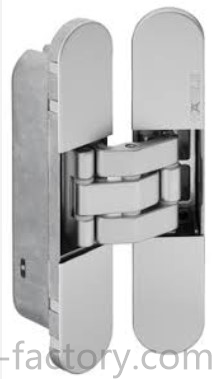
Modern doors often need controlled movement rather than simple mechanical connection. Within architectural hardware, Hydraulic Self Closing Hinges integrate a closing function into the hinge structure, combining mechanical support with hydraulic movement control. Developing this type of hardware requires careful consideration of material properties, internal fluid behavior, sealing technology, machining accuracy, structural loading, installation conditions, and quality management throughout the manufacturing process.
Material selection is one of the first engineering decisions. Structural hinge components need to withstand repeated loads while retaining dimensional stability. Steel can provide a strong foundation for load-bearing sections, while stainless steel may be selected for environments where moisture resistance is important. Engineering alloys can also be used for internal parts where specific requirements for machinability, wear resistance, or weight are involved.
Consistent raw materials help manufacturers maintain predictable production results. Differences in hardness or chemical composition can influence machining, forming, heat treatment, and surface finishing. Incoming inspection, supplier qualification, material documentation, and batch traceability can help control these variables. Reliable material management is particularly important when components need to maintain close dimensional relationships during assembly.
The hydraulic closing mechanism requires carefully coordinated internal components. Chambers, shafts, seals, valves, moving elements, and structural housings must work together within a compact space. As the door moves, hydraulic resistance can regulate the release of mechanical energy and influence the closing behavior. Engineers need to consider fluid flow, internal pressure, component compatibility, and the relationship between the hydraulic system and the door structure.
Precision machining is essential for maintaining these relationships. CNC turning, milling, drilling, grinding, and other processes can produce accurate housings, shafts, mounting sections, and contact surfaces. Critical dimensions should be monitored throughout production because small deviations may affect assembly or movement. Digital inspection equipment can help manufacturers detect dimensional variation before components proceed to final assembly.
Sealing performance is another key consideration. Hydraulic systems depend on maintaining the appropriate fluid environment while components move repeatedly. Seal materials should be selected according to temperature, environmental exposure, chemical compatibility, and expected operating conditions. Clean assembly procedures are equally important because particles or surface damage can compromise sealing interfaces.
Surface treatment protects the hardware from environmental influences while supporting architectural appearance. Doors and their hardware may encounter humidity, dust, cleaning chemicals, fingerprints, and temperature changes. Suitable pretreatment, coating, plating, polishing, or related processes can protect exposed metal surfaces. Consistent surface preparation is necessary to maintain both appearance and finishing quality across production batches.
Structural design should evaluate the hinge as part of the complete door assembly. Door weight, frame rigidity, mounting positions, and surrounding materials all influence the forces transmitted through the hardware. Engineers can examine load distribution, connection stability, stress concentration, and movement paths to create a balanced structure. This systems-based approach helps prevent the hydraulic mechanism from being evaluated separately from the components it supports.
Installation accuracy has a direct effect on operation. A misaligned frame or inconsistent mounting position can create additional friction and uneven loading. Installers should verify mounting surfaces, door position, frame alignment, and appropriate clearances before completing the installation. Accurate positioning can reduce unnecessary stress and help maintain predictable movement throughout repeated use.
Manufacturing automation can improve consistency across larger production programs. Automated machining, dimensional measurement, assembly assistance, and traceability systems can reduce variation in repetitive operations. Process data can also help manufacturers identify recurring issues related to tooling, dimensions, seals, or assembly procedures. Effective automation should be combined with regular equipment maintenance and qualified quality supervision.
Application requirements vary by building type. Residential projects may prioritize smooth movement and compact integration, while commercial doors may experience higher operating frequency. Hospitality environments can require consistent hardware across many rooms, while institutional buildings may emphasize serviceability and long-term maintenance. Understanding these differences helps manufacturers select suitable materials and structural configurations.
Lifecycle performance is also relevant to responsible hardware development. Efficient material use can reduce manufacturing waste, while durable finishes and maintainable components may help extend service cycles. Protective packaging can reduce transportation damage without unnecessary material consumption. These considerations allow manufacturers to address both mechanical performance and production efficiency.
Quality control should cover material inspection, machining accuracy, hydraulic assembly, sealing, surface treatment, and functional testing. In-process measurement can identify deviations before final assembly, while movement testing can provide additional information about the completed mechanism. Documentation and traceability are also useful for international buyers who require consistent quality across repeated purchasing programs.
For buyers evaluating suppliers, engineering capability, material management, machining technology, hydraulic assembly experience, finishing processes, inspection systems, and technical communication are important considerations. Hydraulic Self Closing Hinges perform most effectively when closing control and structural support are developed as one integrated system. Lanxi Maya Hardware Co., Ltd. provides architectural hardware information through https://www.hinges-factory.com/product/catalogue-download/ for buyers evaluating suitable door hardware solutions.
