


Which Materials Work With a High Speed Folder Gluer?
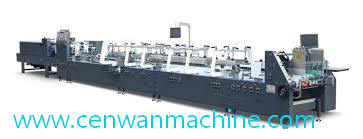
Packaging production often begins with a flat sheet, yet the finished carton depends on how that sheet behaves throughout feeding, folding, gluing, and pressing. A high speed folder gluer must handle these stages while keeping the blank properly aligned and allowing each crease to follow the intended folding path. Paperboard is widely used for cartons, but its weight, stiffness, coating, moisture condition, and surface finish can vary from one application to another. cenwanmachine provides folder gluer equipment for carton manufacturing, making material compatibility an important point for buyers comparing production equipment. So, what materials can a High Speed Folder Gluer process?
Paperboard remains one of the principal materials used with folder gluing equipment. It is found in packaging for cosmetics, food products, medicines, household goods, personal care products, and various retail items. Its relatively smooth surface supports printing, while its structure gives a carton enough rigidity to maintain its shape after folding. Even within the same category, however, paperboard can behave differently during production. A lighter sheet may require careful feeding and pressure adjustment, while a heavier grade can place different demands on transportation and folding components.
The grammage of a board is particularly relevant because it influences stiffness and handling characteristics. A machine intended for carton production should have a working range that corresponds with the materials used by the packaging plant. The CenWan High-speed Four-fold Lock Bottom Folder Gluer is designed for cardboard within a specified grammage range, covering various common folding carton applications. Rather than selecting equipment solely according to its maximum operating capability, manufacturers can compare the board used in regular orders with the machine's recommended material specifications.
Coated paperboard introduces another consideration. Many commercial cartons receive a printed finish followed by lamination, UV treatment, or another surface process. Such treatments can change the way adhesive interacts with the sheet. A surface that looks smooth and attractive after printing may not provide the same bonding characteristics as untreated board. When glue has difficulty forming a stable bond, the issue may come from the material surface rather than the folding mechanism itself. Testing the actual packaging stock before production can therefore provide useful information about adhesive behavior.
Laminated board can require additional preparation around the glue area. If the surface has a film or coating that interferes with bonding, cleaning and activation may be necessary before adhesive application. CenWan offers an optional plasma treatment system for applications involving difficult surfaces such as laminated or UV-treated materials. This type of treatment is intended to prepare the adhesive area, giving production teams another option when conventional bonding conditions are not suitable for a particular packaging material.
The shape of the carton also matters when discussing material compatibility. A straight-line carton has a relatively direct folding sequence, while a lock-bottom design introduces additional panels and folding movements. Four-corner and six-corner structures require coordinated movement across several sections. A board that performs well with one carton design may require different machine settings when used for another structure. CenWan's four-fold system is designed for straight-line boxes, bottom-lock boxes, and selected four-corner or six-corner structures, giving manufacturers room to consider different packaging formats within their production planning.
Creasing quality should not be overlooked. Folding equipment follows the creased lines prepared during die cutting, and the condition of those lines can affect how accurately the blank folds. If the crease is too shallow, damaged, or poorly positioned, even a capable machine may have difficulty producing a clean finished carton. Board grain direction can also influence folding behavior, particularly when a package contains several narrow panels or requires repeated changes in direction. Material preparation and machine setup therefore work together rather than functioning as separate concerns.
Feeding performance becomes increasingly important when a plant handles several paperboard varieties. Sheets need to enter the machine individually and remain aligned as they move toward the folding sections. Variations in stiffness, friction, and surface condition can influence how a stack separates during feeding. Adjustable guides and a properly configured transport system help accommodate these differences. For production teams, a stable feeding process can also make subsequent folding and gluing adjustments easier to control.
Adhesive selection should be considered at the same time as board selection. Paperboard may absorb glue at a different rate depending on its composition and surface treatment. Coated or laminated stock can require different bonding conditions from untreated material. The referenced CenWan equipment uses white latex as its listed glue type, while an optional spraying system is available for irregular box structures. These options are relevant when packaging production involves carton designs that do not follow one simple folding pattern.
Material condition before processing can also influence the result. Sheets exposed to unsuitable humidity may curl, soften, or change their handling characteristics. Dust and loose particles can affect feeding and bonding, while inconsistent die cutting can create alignment problems during folding. Keeping stock properly stored and checking sheets before they reach the production line can help reduce avoidable interruptions. The machine and the material should be viewed as part of the same production process, particularly when orders involve different board specifications.
Automation provides another way to manage material changes. When a packaging facility switches between carton sizes and structures, operators may need to adjust guides, folding sections, pressure settings, and other components. Frequent manual changes can make setup less convenient when orders vary throughout the working day. CenWan's referenced folder gluer includes an optional one-touch adjustment function with QR code support, allowing stored parameters to be associated with particular jobs. This can be useful for manufacturers handling a varied carton portfolio rather than a single standardized product.
Production speed should also be evaluated alongside material stability. A faster running rate does not compensate for unsuitable board, weak creasing, poor adhesive conditions, or inconsistent feeding. When these factors are controlled, the equipment can operate within its intended production conditions while maintaining a consistent folding path. Full servo motor control and adjustable machine sections are among the features offered on the referenced CenWan model, giving packaging manufacturers several parameters to consider when matching equipment with their regular production materials.
For companies processing folding cartons, material testing can be a practical part of equipment selection. Samples can be prepared using the actual board, coating, carton structure, and adhesive planned for production. The test can then examine feeding behavior, crease response, folding accuracy, glue placement, compression, and the appearance of the finished package. This approach gives manufacturers information that a specification sheet alone cannot provide, especially when packaging orders involve coated paperboard, unusual structures, or several material grades.
CenWan provides folder gluer equipment for carton manufacturers that need to work with different cardboard applications, with its product range covering machine configurations and production requirements for folding and gluing operations. For businesses assessing equipment for cardboard box production, the High Speed Folder Gluer information and technical details can be viewed directly at https://www.cenwanmachine.com, where buyers can examine the High-speed Four-fold Lock Bottom Folder Gluer and consider its configuration against their own board specifications, carton structures, and production arrangements.
