


Firewall Sound Deadener Car Heat Shield Insulation: Control Engine Heat, Reduce Noise, and Improve Cabin Comfort
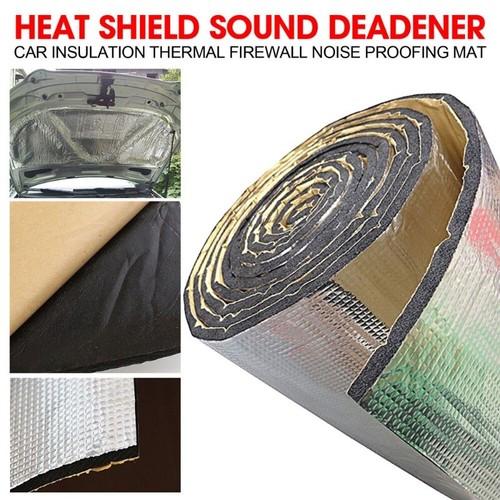
The firewall sits between two demanding environments: the hot, mechanically active engine bay and the passenger compartment. Using firewall sound deadener car heat shield insulation as part of a properly planned vehicle treatment can help address several sources of discomfort, including structural vibration, engine-bay noise, and heat transfer. Because these materials perform different functions, understanding how damping, thermal protection, and insulation work together is essential when planning an effective installation.
Engine noise does not reach the cabin through just one path. Mechanical vibration can travel through the vehicle structure, while airborne sound can pass through gaps and openings around the firewall. At the same time, heat generated in the engine compartment can transfer toward the passenger area. Treating the firewall strategically can therefore contribute to a quieter and more comfortable driving environment.
The objective should not be to make the vehicle completely silent or eliminate engine heat entirely. Instead, a properly designed treatment can reduce unwanted vibration and help manage heat transfer while preserving the vehicle's mechanical systems, service access, and safety requirements.
Why the Firewall Deserves Special Attention
The firewall is a critical structural boundary in a vehicle. It separates the cabin from the engine compartment while accommodating or surrounding numerous components, openings, wiring routes, HVAC equipment, and other systems.
Because of its location, the firewall can be exposed to considerable heat and vibration. Engine operation creates mechanical energy that can travel through mounting points and body structures, while engine-bay temperatures can increase the thermal load on nearby surfaces.
A treatment applied to the firewall should therefore be selected according to the specific problem being addressed. Noise reduction and thermal management are related goals, but they are not identical.
Sound Deadening and Heat Insulation Do Different Jobs
One of the most important concepts in automotive acoustic treatment is understanding material function.
Sound deadening is primarily intended to reduce structural vibration and panel resonance. Damping materials can make metal panels less responsive to vibration, helping reduce some of the noise generated by engine operation, road surfaces, and other sources.
Thermal insulation has a different purpose. It is designed to slow or manage heat transfer between hot and cooler areas.
A heat shield may work differently again, particularly when its purpose is to manage radiant heat from a nearby high-temperature source.
Using the right material for the right job is more effective than assuming one product will provide identical acoustic and thermal performance.
Understanding Engine-Bay Heat
The engine compartment naturally generates significant heat during vehicle operation. Exhaust components, the engine itself, turbocharging equipment where applicable, and other components can contribute to the thermal environment.
Some of that heat can transfer through the firewall and surrounding structures. The amount of heat reaching the cabin depends on vehicle design, airflow, existing insulation, component temperatures, and the condition of factory barriers.
Additional thermal treatment can help manage this transfer, but it should complement—not replace—the vehicle's existing cooling and heat-management systems.
If the cabin is experiencing abnormal heat, it is important to investigate the underlying cause rather than relying solely on insulation.
Reducing Engine Noise at the Source Path
Firewall treatment can be useful because of the firewall's position between the engine and cabin.
Engine noise can include mechanical sounds, combustion-related noise, vibration, accessory noise, and other frequencies produced during operation. Some of this energy can reach occupants through the vehicle's structure or openings.
Damping the firewall can help reduce panel resonance, while suitable insulation can provide additional acoustic separation where appropriate.
However, acoustic treatment is not a substitute for addressing abnormal mechanical noise. A sudden change in engine sound should be investigated mechanically before attempting to mask it with additional insulation.
Why Gaps and Openings Matter
Even an effectively treated firewall can lose some of its acoustic and thermal benefit if significant openings remain untreated or poorly sealed.
Vehicles contain passages for wiring, pedals, HVAC components, steering systems, cables, and other equipment. These areas need to remain functional and properly sealed according to the vehicle's original design.
When planning an installation, identify existing openings and understand what each one is used for. Materials should never obstruct moving components, drainage paths, ventilation systems, service points, or essential mechanical functions.
A thoughtful installation works around the vehicle's engineering rather than simply covering every available surface.
Material Selection Should Follow the Problem
There is no single universal material for every firewall application.
A damping layer can be useful for reducing vibration in metal panels. A closed-cell foam or other appropriate insulation layer may provide acoustic separation and help manage thermal transfer depending on its specifications. A dedicated heat barrier may be appropriate in areas exposed to significant radiant heat.
The important question is not simply, “Which material is thickest?” Instead, ask what type of energy needs to be controlled.
For acoustic vibration, focus on damping characteristics. For airborne sound, consider absorption or isolation properties. For heat, examine the material's temperature rating and thermal performance.
Choosing based on function produces a more technically sound installation.
Temperature Resistance Is Critical
Firewall materials can be exposed to higher temperatures than many interior surfaces.
Any product used near the engine compartment should be appropriate for the temperatures and conditions of its intended location. Product specifications should be reviewed carefully, especially when materials are installed near exhaust components or other high-temperature areas.
Do not assume that a material suitable for a cabin floor or door is automatically appropriate for an engine-facing application.
The wrong material can deteriorate, lose adhesion, or create a safety concern when exposed to conditions beyond its intended operating range.
Installation Requires More Than Coverage
Effective firewall treatment depends on how the material is installed.
Surfaces should generally be clean and properly prepared so that adhesive-backed materials can bond securely where applicable. Panels should be treated according to the material's installation requirements rather than simply covered as quickly as possible.
Avoid unnecessary overlap that interferes with fasteners or service components. Maintain access to areas that may need future inspection or repair.
Most importantly, materials must remain clear of moving components, pedals, wiring that requires movement, ventilation paths, and other systems where interference could create a hazard.
Protect the Cabin Without Creating New Problems
The firewall is not an isolated piece of metal. It is part of a complex vehicle system.
Before adding material, consider the location of brake components, steering mechanisms, HVAC equipment, wiring harnesses, fluid lines, and other components. The finished treatment should not alter the operation of any safety-critical system.
Material thickness can also affect fitment. Adding several layers may prevent factory panels or trim from reinstalling correctly.
A successful upgrade is therefore one that improves comfort while preserving the original function of the vehicle.
Combine Treatments Strategically
Using multiple material types can make sense when different problems need to be addressed.
For example, vibration damping can target structural resonance, while an appropriate insulating layer can help manage airborne sound and heat transfer. A dedicated heat barrier may then be considered for a particularly high-temperature area when its specifications support that application.
The layers should be selected deliberately rather than stacked simply to increase thickness.
More material does not automatically mean better results. The effectiveness of an automotive treatment depends on material properties, coverage, placement, installation quality, and the problem being addressed.
Cabin Comfort Goes Beyond Noise
Reducing unwanted engine noise can make conversations easier and improve the perceived refinement of the vehicle. Managing heat transfer can also make the cabin more comfortable, particularly during demanding driving conditions or hot weather.
There is an additional benefit to controlling structural vibration: reducing unwanted resonance can help create a more controlled acoustic environment for the vehicle's audio system.
However, firewall treatment should be viewed as one part of a broader comfort strategy. Doors, floor panels, roof sections, wheel wells, and other areas may also contribute to road noise and vibration.
When Firewall Treatment Is Most Useful
Firewall treatment can be particularly relevant when engine noise or heat is noticeably entering the cabin and the existing factory barriers are insufficient for the desired comfort level.
It can also be useful during a broader vehicle sound-control project where multiple noise paths are being addressed together.
The treatment should always begin with identifying the dominant problem. If road noise is the primary complaint, concentrating exclusively on the firewall may produce limited results. Likewise, if the main issue is abnormal engine noise, mechanical inspection should come first.
Understanding the source leads to a more efficient upgrade.
Avoid Common Installation Mistakes
One frequent mistake is assuming that maximum coverage automatically produces maximum performance. Strategic placement can be more useful than adding unnecessary layers.
Another mistake is using materials without checking their temperature suitability. Engine-bay and firewall applications can demand different specifications from ordinary interior installations.
Poor surface preparation can also weaken adhesive performance, while excessive thickness can interfere with trim and components.
Finally, never cover components simply because they are visible. Every area around the firewall has a purpose, and some components require ventilation, movement, drainage, or service access.
A Smarter Approach to Engine Noise and Heat
The strongest firewall upgrades begin with diagnosis.
Determine whether the main concern is structural vibration, airborne engine noise, radiant heat, conductive heat transfer, or a combination of these factors. Then select materials that address those specific forms of energy.
A well-designed firewall sound deadener car heat shield insulation strategy can combine complementary technologies without treating them as interchangeable. This creates a more logical approach to improving cabin comfort.
The objective is controlled performance—not simply adding as much material as possible.
Final Thoughts
The firewall plays an important role in separating the passenger compartment from the engine environment, making it a valuable area to consider when improving vehicle comfort. A properly planned firewall sound deadener car heat shield insulation installation can help reduce structural vibration, manage unwanted engine noise, and limit heat transfer when suitable materials are used correctly.
The most important consideration is matching each material to its intended function. Sound deadening, acoustic insulation, and heat shielding solve different problems, and the best results come from using them strategically.
With careful material selection, temperature-appropriate products, proper surface preparation, and respect for the vehicle's mechanical and safety systems, firewall treatment can become a practical part of a broader effort to create a quieter, cooler, and more refined driving environment.
