


Train Logistics Services Company: The Rail Decision Most Businesses Get Wrong
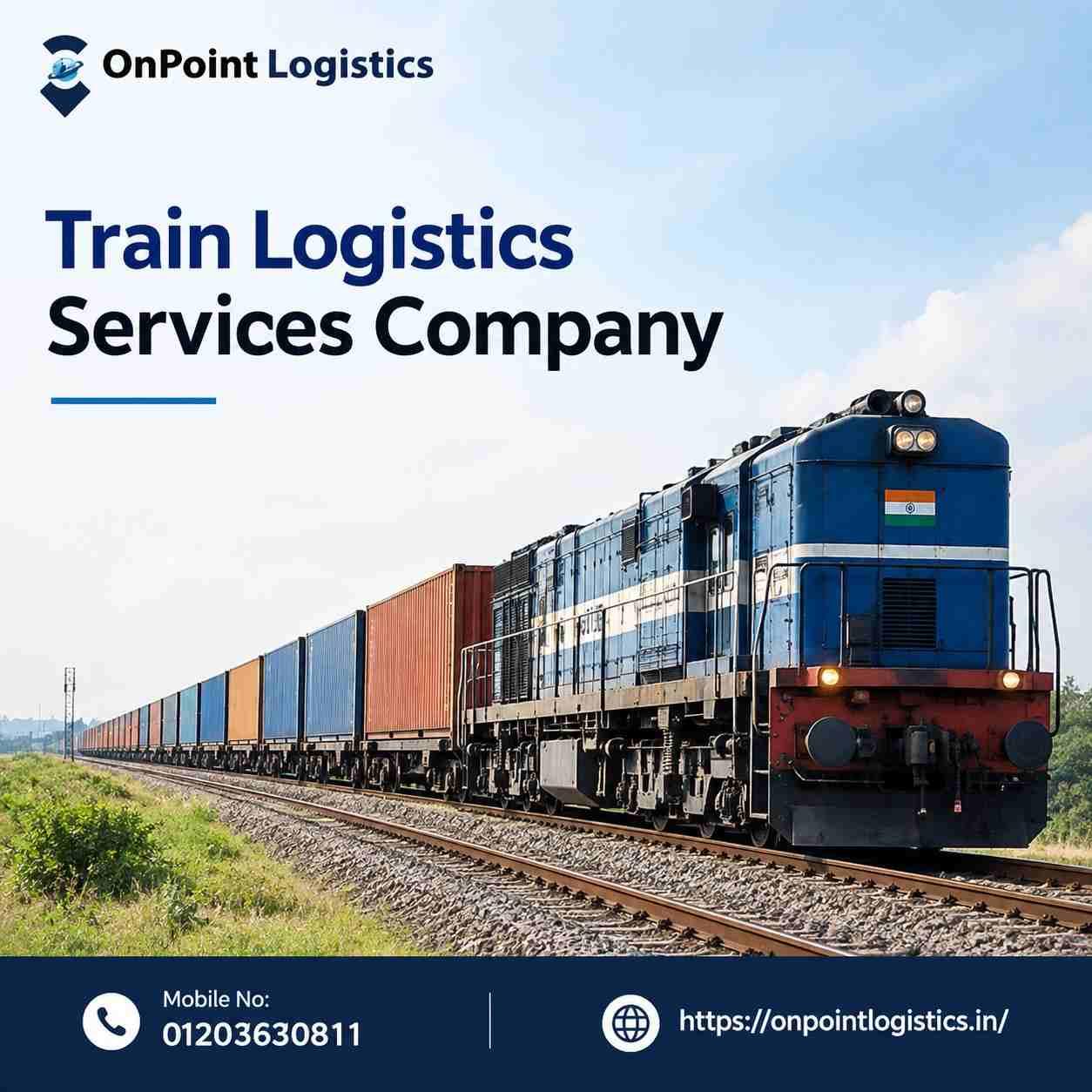
A business does not usually wake up one morning and decide, “We should move our cargo by rail.” The conversation normally starts somewhere else. Freight bills have increased, long-distance trucks are becoming harder to plan, dispatch volumes are growing, or the company is trying to move inventory between two regions on a recurring basis.
That is where a train logistics services company enters the discussion.
But there is a problem with how rail freight is often evaluated. Businesses tend to compare the rail freight charge with a truck quotation and stop there. That is not the real comparison. A rail shipment has a different operating rhythm. Cargo has to reach the right terminal, be prepared for the movement, pass through handling points, and then continue to its destination after the rail leg is complete.
So the real question is not whether trains are cheaper than trucks. It is whether rail makes the entire movement more sensible for a particular shipment.
The shipment matters more than the transport mode
Imagine a manufacturer sending stock from a production unit to a warehouse several states away. The company ships every week, quantities are reasonably predictable, and the receiving warehouse can plan inventory in advance.
Rail could make considerable sense here.
Now change the situation. The same company receives urgent orders throughout the day, ships small quantities to different customers and frequently changes destinations. Suddenly, the advantages of rail become much harder to capture.
The distance has not changed. The cargo has not necessarily changed either. What changed was the behaviour of the shipment.
This is one of the most overlooked parts of logistics planning. Transport decisions should follow the shipment pattern, not the other way around.
A logistics manager who starts with “rail is cheaper” can easily build the wrong movement. A manager who starts with “what kind of cargo are we moving, how often, where does it need to go and how predictable is the demand?” has a much better chance of finding the right model.
Indian Railways has been developing more cargo-oriented infrastructure around this broader approach. Its Gati Shakti Multi Modal Cargo Terminal policy was introduced to encourage additional terminals for rail cargo, while its stated logistics strategy also includes multimodal logistics parks, private freight terminals, road bridging solutions and rail transshipment hubs.
That tells us something important: modern rail freight is increasingly about connecting modes, not pretending that one mode can handle every part of a shipment.
A rail journey actually begins before the train
This sounds obvious, but it changes how the cost and effort should be calculated.
A factory may be 40 or 50 kilometres from the nearest suitable terminal. The cargo still needs to reach that terminal. Someone has to coordinate loading, documentation and handover. At the destination, the process happens again before the goods reach the final warehouse.
So when someone says, “The rail freight is lower,” the immediate follow-up should be, “What does the complete journey cost?”
This is where many transportation comparisons fall apart.
The rail leg might be commercially attractive, but an inconvenient origin terminal can add substantial road movement. A destination without practical last-mile connectivity can create another problem. If cargo sits waiting because the receiving vehicle is not ready, the theoretical saving starts looking much less impressive.
A good train logistics services company should therefore examine the movement from factory to terminal, terminal to destination terminal, and destination terminal to receiver as one connected operation.
That is a very different approach from simply booking cargo on a train.
Why long-distance rail logistics solutions require planning discipline
Road transport gives businesses something they often take for granted: flexibility.
If a shipment changes tomorrow, a truck can potentially be arranged around the new requirement. Rail is different. It operates within a scheduled network and depends on terminals, cargo availability and planned movement.
That does not make rail inconvenient. It means rail works differently.
For businesses with regular replenishment cycles, this can actually be an advantage. Instead of treating every shipment as a separate urgent task, the logistics team can establish a predictable movement pattern. Inventory can be prepared in advance. Dispatches can be consolidated. The receiving warehouse can plan manpower and storage space.
This is where long-distance rail logistics solutions can become genuinely useful.
Take a business supplying several regional warehouses. If the company already knows that a particular warehouse requires replenishment every week, there is an opportunity to build a planned rail movement around that demand. Road transportation can then handle the shorter connecting legs.
The result is not “rail replacing road.”
It is a logistics network where each mode has a defined job.
That distinction matters.
The cheapest train shipment is not always the most economical shipment
There is another trap here.
Businesses sometimes ask for affordable train shipment services before understanding what affordable actually means. A low freight rate looks attractive, but it does not automatically mean lower logistics expenditure.
Suppose a shipment requires additional road transportation at both ends, extra handling and more inventory buffer because the movement is less flexible. Those costs need to be included.
At the same time, the opposite can be true. A company with steady volumes and suitable terminal access may discover that rail becomes financially attractive once repeated long-distance road movements are compared on a complete-cost basis.
So there is no universal answer.
A serious comparison should consider freight, first-mile movement, handling, terminal-related expenses, inventory implications and final delivery. It should also consider how much internal coordination the movement requires.
Honestly speaking, this last part is frequently ignored.
If employees spend hours every week coordinating separate transporters, checking loading status and following up on delivery issues, that internal effort is part of the logistics cost even if it never appears on a freight invoice.
What separates a rail service from a useful logistics solution
A railway booking by itself is not a complete logistics solution.
Businesses need coordination around the booking. Cargo needs to arrive in suitable condition and at the appropriate time. The receiving side needs to know what is coming. The road connection needs to be available when required.
This is where service providers can add practical value.
A capable rail logistics company in India should be able to understand the complete movement rather than only selling rail capacity. It should be able to discuss terminal access, cargo characteristics, loading arrangements, road connectivity and delivery requirements.
There is also a simple but revealing question businesses can ask a provider:
“What happens if our cargo misses the planned movement?”
The answer tells you a lot.
If the provider has a clear exception process, communication flow and alternative arrangement, you are discussing logistics management. If the response is simply “we will check with the railway,” the service may be little more than booking assistance.
That difference becomes very important when shipment volumes increase.
Cargo characteristics can quietly change the entire decision
Not every product behaves well in a multimodal environment.
Packaging, dimensions, handling sensitivity and loading requirements can all affect the suitability of rail movement. A product that is easy to move directly by truck may require more careful preparation when it passes through additional handling stages.
This does not mean rail is unsuitable for such cargo. It means the shipment has to be designed accordingly.
For example, businesses dealing with manufactured components may need packaging that protects against repeated loading and unloading. A company moving consumer products may need better palletization and SKU-level dispatch planning. Businesses carrying time-sensitive goods need to understand the consequences of missing a planned connection.
These details are rarely visible in a simple freight quotation.
They become visible after the shipment starts moving.
That is why Train Cargo Services should be evaluated based on the actual cargo profile rather than simply the distance involved.
When rail should not be your first choice
There is value in saying this clearly: rail is not automatically the better answer.
If the shipment is extremely urgent, highly fragmented, destination points are scattered, or volumes are too unpredictable to plan properly, road transportation may remain more practical.
A business should also be cautious if the rail option requires excessive first-mile and last-mile movement. In that situation, the company may technically be using rail but operationally still depending heavily on road transport.
The decision should therefore be based on fit.
A good logistics partner should be comfortable telling a customer when rail does not make sense. That is actually a positive sign. If every shipment is presented as a perfect candidate for the same service, the recommendation is probably driven by the available service rather than the customer's actual requirement.
A practical rail feasibility check before committing
Before moving a recurring shipment onto rail, a logistics team should sit down and examine the complete movement. Not just the freight rate.
The most useful questions are:
-
Where exactly does the cargo originate, and how far is the practical loading terminal?
-
Is the shipment volume consistent enough to plan around scheduled movement?
-
What happens at the destination terminal?
-
How much road transportation is required before and after the rail journey?
-
Can the cargo tolerate additional handling?
-
How much delivery flexibility does the customer actually require?
-
What is the backup plan if the planned movement changes?
-
What will the total cost look like after adding handling, road connectivity and operational overhead?
These questions can reveal whether the business has a genuine rail opportunity or simply a tempting quotation.
Rail freight is becoming more digital, but visibility still depends on execution
One interesting change in Indian rail logistics is the increasing role of digital systems.
Indian Railways reported the implementation of additional parcel booking stations and an online cargo portal for customers on the Dedicated Freight Corridor, including integrated functions related to payment, loading, unloading and delivery. Its reporting also describes technology initiatives around container terminal management, including real-time visibility and AI-supported data analysis.
For logistics teams, this matters because visibility is becoming part of the service expectation.
Knowing that cargo has been booked is not enough. Businesses increasingly need to know where the shipment is within the process and whether the next movement is ready.
But there is an important catch.
Technology can show a problem. It cannot automatically design a sensible solution to that problem.
A tracking system can tell a logistics manager that cargo is waiting. Someone still needs to understand why it is waiting, what the commercial impact could be and what action should be taken.
So digital visibility is valuable, but operational judgment remains essential.
What 2026 changes for businesses considering rail
The more interesting development in 2026 is not simply that rail is becoming more digital. It is that rail is increasingly being treated as part of a wider logistics network.
The expansion of multimodal cargo terminals, freight-focused infrastructure and road-rail connections creates more opportunities for businesses to design combined transportation models. Indian Railways has also reported initiatives involving cargo aggregators, parcel services and multimodal logistics infrastructure.
For businesses, that means the question is gradually changing.
Instead of asking, “Should we use trains?”
They should be asking:
“Which part of our supply chain would become more efficient if rail handled it?”
That is a much more useful question.
A manufacturer may use rail for scheduled intercity inventory transfers. A distributor may consolidate recurring regional shipments. A business with multiple warehouses may use rail for planned replenishment while keeping road capacity for urgent orders.
The future is unlikely to be about choosing one transport mode permanently.
It is about assigning the right job to the right mode.
The real value of rail comes from how the journey is designed
A train does not make a shipment efficient by itself.
The efficiency comes from everything surrounding that train: how cargo is consolidated, where it enters the rail network, how it is handled, how the destination is connected and how reliably the final delivery is completed.
That is the part businesses should evaluate when looking for a train logistics services company.
If the provider only discusses freight rates, the conversation is incomplete. If the provider understands your inventory cycle, shipment frequency, terminal access, road connections, cargo characteristics and delivery expectations, you are having a much more useful logistics conversation.
For businesses with predictable long-distance movements, rail can become a valuable part of the transportation mix. But the winning approach is not to force every shipment onto the railway.
It is to identify the shipments where rail genuinely improves the network, build reliable connections around them, and keep enough flexibility for the movements that need something different.
That is how cost-effective train shipment delivery should really be measured: not by the cheapest rail quotation, but by whether the complete journey works better for the business.
FAQs
1. When is rail transportation a practical choice for business cargo?
Ans. Rail generally becomes more practical when cargo moves over longer distances, shipment quantities are reasonably predictable, and the business can plan around scheduled movements. The complete first-mile and last-mile arrangement should also be workable.
2. How should businesses compare rail and road transportation costs?
Ans. Compare the entire movement, not just the line-haul rate. Include pickup, terminal handling, destination movement, inventory impact, delivery requirements and internal coordination before deciding which option is actually economical.
3. What are long-distance rail logistics solutions?
Ans. They are transportation models where rail handles a substantial portion of a long-distance movement, often with road transportation connecting the origin and destination. This approach is useful when the shipment profile supports planned movement.
4. Are affordable train shipment services suitable for every business?
Ans. No. Businesses with highly urgent, unpredictable or fragmented shipments may find road transportation more practical. Rail tends to become more attractive when cargo can be planned, consolidated and moved through suitable terminals.
5. What should I look for in a rail logistics company in India?
Ans. Look beyond the rail freight rate. Evaluate terminal connectivity, cargo handling, first-mile and last-mile support, shipment visibility, exception management and the provider's ability to coordinate the complete movement.
