


The Basics of Nearshore Software Development Today
Picture a mid-size e-commerce brand preparing for its busiest sales season yet. Their small in-house team was already overloaded fixing bugs on the live site, with no spare hands to build the new checkout experience management wanted. Recruiting locally would've taken weeks they simply didn't have, so the leadership team looked into nearshore software development as an alternative. Within days, a skilled team based just a few hours away joined the project, worked alongside their regular team hours, and helped launch the upgraded checkout well before the seasonal rush. That decision quietly became a turning point in how the company approached technology projects going forward.
Stories like this keep showing up across different industries. Business owners are discovering that where a development team is based can influence a project's speed, budget, and end result just as much as raw technical ability does. Let's break down why nearshore development keeps earning attention, and how it might be the right fit for your own upcoming project.
What Does Nearshore Software Development Mean?
Simply put, nearshore development is the practice of teaming up with a software development company located in a nearby or neighboring country, one that shares closely aligned working hours with your own team. It falls somewhere between hiring locally and going with a traditional offshore setup, giving you the benefit of real-time communication without the higher expense of building an entire team in-house.
Because of this in-between approach, businesses get to enjoy convenience and affordability together, a combination that's rare with fully remote, far-flung outsourcing arrangements.
Why Companies Keep Turning to Nearshore Teams
1. Faster Turnaround, Fewer Delays
Overlapping work hours truly change the pace of a project. When your developers are active during your normal business day, questions get cleared up almost instantly, feedback loops shrink, and small problems get caught early instead of piling up. As a result, deadlines stay realistic rather than slipping because of one unanswered message.
2. On-Demand Access to Specialized Skills
Most companies simply don't have an in-house specialist for every technical need. Whenever a project requires custom software development, a system upgrade, or a completely new build, nearshore teams typically bring ready expertise that would take months to source and train internally. In other words, you get the right skill set exactly when the project calls for it.
3. Genuine Cost Savings Without Losing Quality
Budget is often the deciding factor, and nearshore development handles this well. Because operating costs differ from one region to the next, you can bring on experienced engineers for noticeably less than local hiring rates, all while keeping communication and delivery standards high. This is exactly why so many companies now prefer software development outsourcing to nearby regions over building a larger in-house team.
4. Comfortable Cultural Compatibility
Nearshore partners frequently share similar business habits, working norms, and sometimes even overlapping holidays with your home market. This shared ground reduces the usual friction of cross-border collaboration, letting the partnership feel smooth rather than transactional.
5. Flexible Scaling as Requirements Shift
Project needs rarely stay the same from kickoff to completion. A dependable nearshore software development partner allows you to expand or reduce your team size as circumstances change, saving you from the lengthy process of building an internal team completely from scratch.
A Step-by-Step Guide to Getting Started
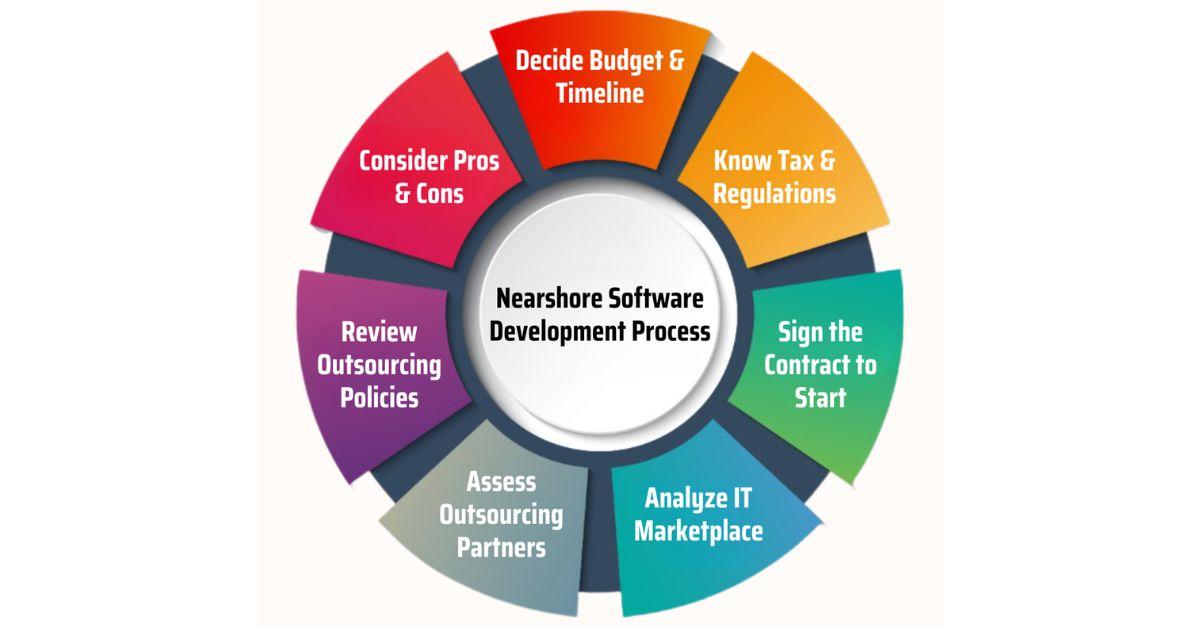
Thinking about giving nearshore development a try? Here's a simple sequence to follow:
-
Pin down your requirements. Get clear on what needs to be built, along with a realistic timeline and budget, before reaching out to anyone.
-
Screen a handful of partners. Look for a proven software development company with a solid history, genuine client testimonials, and relevant technical depth.
-
Check for schedule overlap. Make sure working hours align reasonably well and agree on shared tools like Slack, Zoom, or Jira.
-
Begin with a smaller trial. Rather than jumping into a large-scale build right away, test the waters with a smaller task or module.
-
Establish clear checkpoints. Break the bigger project into phases with defined, trackable deliverables so progress is easy to monitor.
-
Grow the partnership gradually. Once the trial proves successful, extend the relationship into larger efforts like software modernization or a full-scale launch.
Following this sequence keeps risk manageable while helping build a partnership based on trust and consistent delivery.
Where Nearshore Teams Add the Most Value
Nearshore teams aren't just for brand-new projects — they're equally useful for strengthening systems you already depend on. Many businesses call on nearshore specialists for software integration services, linking outdated systems with newer technology so data can move freely across departments. Others turn to nearshore developers for crm software development services, building customer management tools designed around their actual sales and support processes rather than settling for a generic, one-size-fits-all platform.
Beyond that, organizations struggling with slow, outdated infrastructure often rely on nearshore partners for complete modernization efforts, turning sluggish legacy systems into something fast, secure, and built to scale, all without demolishing the entire setup and starting over.
Why ThinkDone Solutions Is Worth Considering
This is precisely where ThinkDone Solutions comes into play. With genuine, hands-on experience in nearshore collaboration, ThinkDone Solutions blends strong technical capability with clear, reliable communication and a real commitment to helping your project succeed. Whether the task is a single new feature or a full digital overhaul, their team functions like a natural extension of your own, not a distant outside vendor.
Working with ThinkDone Solutions means partnering with a team that respects your timelines, protects your budget, and delivers software that genuinely addresses the challenges your business faces. Reach out today and discover how a nearshore partnership can move your next project forward with real confidence.
Conclusion
Nearshore software development has become far more than a temporary trend — it's now a reliable, results-focused way to build stronger software, faster, and without overspending. From quicker communication and real cost savings to specialized skills available on demand, the advantages speak for themselves. Whether your goal is scaling up, modernizing an outdated system, or launching something entirely new, working with a trusted nearshore partner like ThinkDone Solutions could be one of the smartest moves your business makes this year.
FAQs
1. What is the main difference between nearshore and offshore development?
The biggest difference is location and time zone overlap. Nearshore teams work in nearby countries with similar working hours, making real-time collaboration much easier compared to offshore teams that may be many hours apart.
2. Is nearshore software development more expensive than offshore?
Generally, nearshore development costs slightly more than offshore but far less than local hiring. Given the improved communication and reduced project delays, most businesses find it well worth the investment.
3. How do I choose the right nearshore development partner?
Look for a company with proven experience, positive client testimonials, transparent pricing, and strong communication practices. Starting with a small pilot project is also a great way to test compatibility before committing long-term.
4. Can nearshore teams handle complex projects like CRM or system modernization?
Yes. Experienced nearshore partners regularly manage complex projects, including custom CRM builds, legacy system modernization, and large-scale software integrations, often bringing specialized expertise that in-house teams may lack.
