


How Equipment Management Software Improves Daily Construction Operations
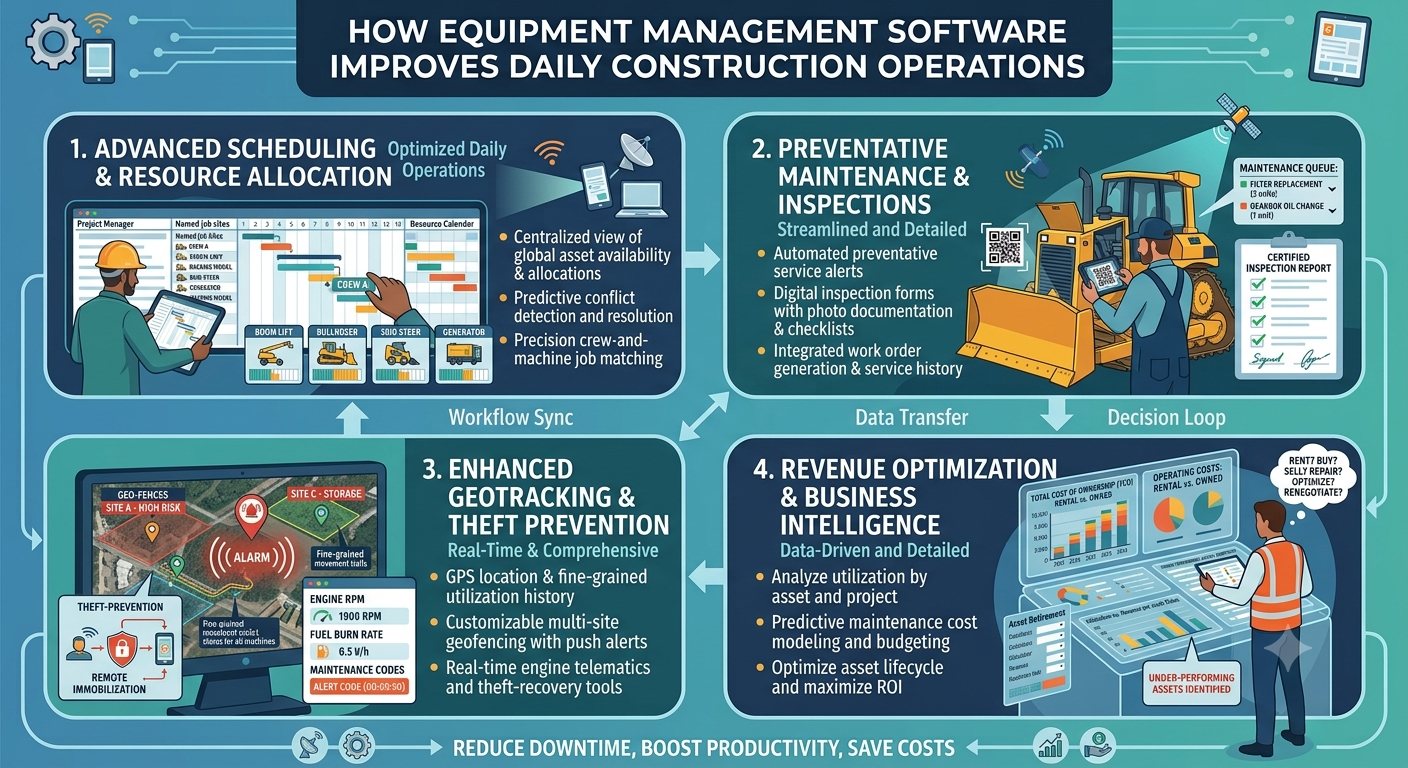
Construction projects rely on hundreds of moving parts working together every day. Heavy equipment, compact machinery, attachments, tools, operators, maintenance teams, and project managers must stay coordinated to keep work progressing according to schedule.
As projects become larger and equipment fleets expand across multiple jobsites, managing these resources manually becomes increasingly difficult. Small communication gaps or missing equipment information can quickly lead to delays, reduced productivity, and higher operating costs.
Clue’s construction equipment management software provides contractors with a centralized system to organize equipment, monitor availability, schedule maintenance, assign resources, and track operational performance. Instead of relying on spreadsheets, paperwork, or phone calls, project teams gain real-time access to the information they need to make better decisions and keep on-site operations running efficiently.
Equipment Management Supports Every Stage of Construction
Every phase of a construction project depends on equipment being available, properly maintained, and assigned to the right tasks.
From site preparation through final project completion, contractors must coordinate equipment that supports:
-
Earthmoving operations
-
Material handling
-
Site grading
-
Excavation
-
Concrete work
-
Utility installation
-
Site cleanup
When equipment is managed effectively, crews can complete work without unnecessary interruptions caused by unavailable or poorly maintained machines.
Manual Equipment Management Creates Unnecessary Challenges
Many construction companies still depend on paper records, spreadsheets, or manual communication to manage equipment. As fleets grow larger, these methods become increasingly difficult to maintain.
Common operational challenges include:
-
Uncertainty about equipment availability
-
Delayed equipment assignments
-
Incomplete maintenance records
-
Difficulty tracking equipment utilization
-
Poor communication between jobsites
-
Increased administrative workload
These challenges reduce operational efficiency and make project planning more complicated.
Centralized Equipment Information Improves Operational Control
Construction managers make better decisions when accurate equipment information is available from one location. Using construction equipment management software, project teams can quickly access:
-
Equipment availability
-
Current jobsite assignments
-
Maintenance status
-
Inspection records
-
Equipment utilization
-
Service history
A centralized platform reduces time spent searching for information while improving coordination across active construction projects.
Smarter Equipment Allocation Improves Productivity
Assigning the right equipment to the right project at the right time is essential for maintaining productive operations. Better equipment management allows contractors to:
Match Equipment with Project Requirements
Managers can identify available equipment and allocate it based on current project priorities.
Reduce Equipment Downtime
Proper scheduling helps minimize idle equipment while ensuring machines remain productive.
Improve Resource Planning
Equipment assignments become more organized, reducing scheduling conflicts between multiple jobsites.
Efficient allocation helps projects remain on schedule while improving equipment utilization.
Equipment Utilization Maximizes Existing Resources
Many organizations purchase additional equipment because they lack visibility into how existing machines are being used.
Monitoring utilization allows contractors to:
-
Identify idle equipment
-
Balance workloads across the fleet
-
Improve equipment scheduling
-
Reduce unnecessary rentals
-
Maximize return on equipment investments
Better utilization allows companies to achieve greater productivity without increasing equipment ownership costs.
Maintenance Management Supports Reliable Operations
Equipment reliability directly affects daily jobsite productivity. Unexpected breakdowns interrupt work, delay project schedules, and increase repair expenses.
Construction equipment management software helps contractors organize:
-
Preventive maintenance schedules
-
Inspection records
-
Service history
-
Equipment condition reports
-
Maintenance reminders
Coordinating maintenance within the equipment management process helps reduce downtime while extending equipment life.
Improving Communication Across Jobsites
Construction companies often manage equipment across several active projects simultaneously. Centralized equipment information improves communication between:
-
Project managers
-
Equipment coordinators
-
Field supervisors
-
Maintenance personnel
-
Equipment operators
When everyone has access to accurate equipment information, scheduling becomes more efficient and project coordination improves.
Digital Records Improve Equipment Oversight
Accurate documentation is essential for effective equipment management. Digital recordkeeping simplifies the organization of:
-
Equipment inventories
-
Assignment history
-
Inspection reports
-
Maintenance records
-
Utilization data
-
Operational history
Well-maintained records improve planning while reducing administrative work.
Data Supports Better Business Decisions
Equipment operations generate valuable information that helps contractors improve performance over time. Managers can analyze:
-
Equipment utilization trends
-
Downtime frequency
-
Maintenance costs
-
Equipment availability
-
Operational efficiency
-
Long-term equipment performance
These insights help organizations make informed decisions regarding maintenance planning, equipment replacement, and future investments.
Preparing for Business Growth
As construction companies expand, managing larger equipment fleets becomes increasingly complex. Modern construction equipment management software supports growth by helping contractors:
-
Standardize equipment management processes
-
Coordinate multiple jobsites
-
Improve operational consistency
-
Manage expanding equipment inventories
-
Scale equipment operations efficiently
A structured equipment management system creates a stronger operational foundation for long-term business success.
Technology Is Transforming Equipment Management
Today's digital platforms provide significantly greater visibility and operational control than traditional manual systems.
Modern solutions often include:
-
Centralized equipment dashboards
-
Mobile access for field teams
-
Digital inspection management
-
Preventive maintenance scheduling
-
Equipment utilization reporting
-
Cloud-based equipment records
These capabilities allow contractors to make faster decisions while improving the efficiency of daily construction operations.
Conclusion
Successful construction projects depend on having the right equipment available, properly maintained, and efficiently managed throughout every stage of work. Manual management methods often create unnecessary delays, reduce equipment utilization, and make operational planning more difficult.
By implementing construction equipment management software, construction companies can centralize equipment information, improve maintenance planning, optimize resource allocation, monitor utilization, and strengthen communication across every active jobsite. A well-organized equipment management strategy helps contractors improve productivity, reduce operating costs, and maintain efficient on-site operations from project start to project completion.
