


What Does a Granuloma Annulare Skin Rash Look Like?
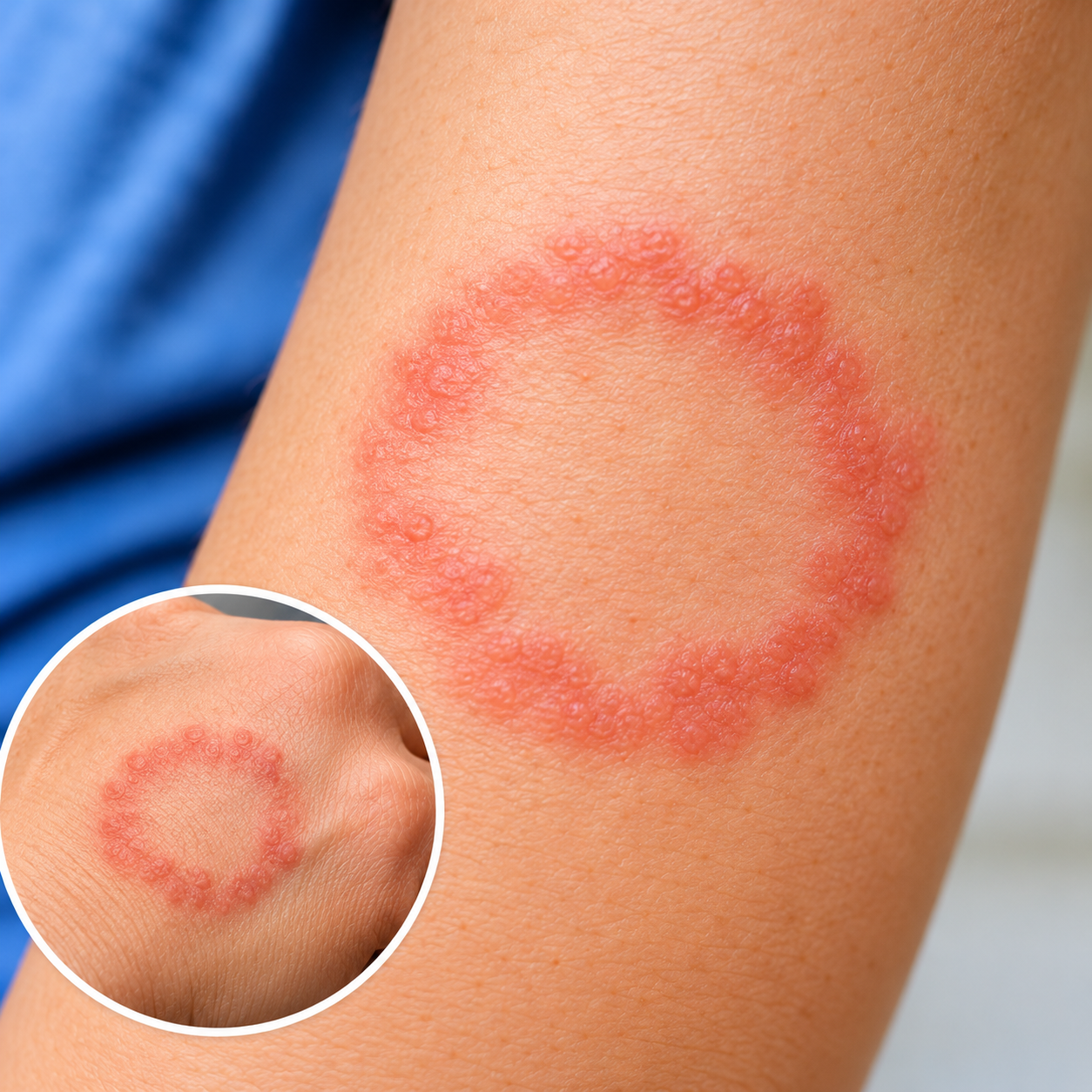
A granuloma annulare skin rash often appears as a ring of small, raised bumps that may be pink, reddish, purple, or similar to your natural skin colour. The bumps usually form a circular or semicircular pattern, creating a distinctive appearance.
Although the rash may look concerning, granuloma annulare is generally a harmless, non-contagious inflammatory skin condition. It does not usually cause pain or significant itching, and many cases gradually disappear without treatment.
Understanding the appearance, symptoms, different types, and possible causes can help you recognise this condition and know when to seek medical advice. However, because several skin conditions can produce similar circular patches, a professional diagnosis is important.
granuloma annulare skin rash and Its Typical Appearance
The most recognisable feature of this condition is a ring-shaped patch formed by tiny, firm bumps called papules. These bumps often begin as separate spots and gradually join together to create a circular border.
The centre of the ring may look relatively normal, slightly lighter, or flatter than the surrounding skin. The outer edge is usually more noticeable because the bumps are grouped closely together.
A typical patch may have the following characteristics:
-
A circular, oval, or semicircular shape
-
A slightly raised or firm border
-
Small, smooth bumps arranged in a ring
-
A relatively clear or normal-looking centre
-
Little or no surface scaling
-
Slow enlargement over several weeks or months
The rash commonly develops on the backs of the hands, fingers, feet, ankles, or elbows. It may affect one area or appear in several places.
According to the American Academy of Dermatology, the most common form produces a raised, ring-shaped patch, although other forms can look quite different.
What Colour Is a Granuloma Annulare Rash?
The colour varies according to a person's natural skin tone, the type of rash, and the stage of inflammation.
On lighter skin, the bumps may appear:
-
Pink
-
Red
-
Reddish-brown
-
Purple
On darker skin, the patches may appear brown, violet, greyish, or close to the surrounding skin colour. In some cases, the rash is easier to recognise by its raised texture and circular arrangement than by its colour.
The affected area may become flatter as the condition develops. Some patches gradually fade, while others remain visible for months or longer.
A granuloma annulare skin rash does not always look bright red. Therefore, people with darker skin should not rely on redness alone when identifying unusual skin changes.
Different Types and Their Appearance
Granuloma annulare has several clinical forms. Each type may produce a different pattern of bumps or patches.
Localised granuloma annulare
This is the most common type. It usually causes one or a few rings of raised bumps on the hands, feet, wrists, ankles, or lower legs.
The rings may slowly increase in size and become flatter over time. They are often painless and may not require treatment.
Generalised granuloma annulare
This form produces numerous small bumps or patches across larger areas of the body.
The lesions may appear on the arms, legs, torso, or other areas. Instead of forming one distinct ring, many small bumps may cluster together or create widespread patches.
Generalised disease can be more persistent than the localised form.
Subcutaneous granuloma annulare
This type develops deeper beneath the skin. It often appears as a firm, rounded lump rather than a visible surface rash.
The lumps are commonly found on the feet, shins, hands, or scalp, particularly in children. They are usually painless and may feel rubbery when touched.
Perforating granuloma annulare
This uncommon form usually affects the hands, fingers, or other areas of the body. It may produce small, crusted or scaly bumps that sometimes release fluid.
Some lesions can become uncomfortable or leave small scars after healing.
Patch granuloma annulare
Patch-type disease appears as flat or slightly discoloured areas rather than clearly raised rings.
The patches may be reddish-brown, purple, or similar to the surrounding skin. This form can be harder to identify because it lacks the typical circular border.
American Academy of Dermatology+1
Where Does the Rash Usually Appear?
The condition most often affects areas exposed to pressure or minor skin trauma, although it can develop almost anywhere.
Common locations include:
-
The backs of the hands
-
Fingers and knuckles
-
Feet and ankles
-
Elbows
-
Wrists
-
Lower legs
Some people develop lesions on the trunk or other parts of the body. Facial involvement is less common in the typical localised form.
A granuloma annulare skin rash may appear on only one hand or foot, while another person may develop several rings on both sides of the body.
The location alone cannot confirm the diagnosis. A dermatologist considers the shape, texture, distribution, duration, and other symptoms before identifying the condition.
Does Granuloma Annulare Cause Itching or Pain?
Most people experience few symptoms apart from the visible skin changes.
The bumps are usually not painful. Some people notice mild itching, tenderness, or discomfort when the affected area is pressed or knocked.
Occasionally, the rash may feel irritated, particularly if it is located where clothing, footwear, or everyday activities repeatedly rub against the skin.
Severe itching, intense pain, warmth, pus, or rapidly increasing swelling is not typical of uncomplicated granuloma annulare. These symptoms may indicate another skin condition or a secondary infection and should be assessed by a healthcare professional.
How Is It Different From Ringworm?
Ringworm is a fungal skin infection that can also produce circular patches. Because the two conditions may look similar, they are sometimes confused.
There are several differences to consider.
|
Feature |
Granuloma annulare |
Ringworm |
|
Appearance |
Ring of smooth, firm bumps |
Often a scaly ring |
|
Centre |
May look normal or slightly flat |
May appear clearer |
|
Surface |
Usually smooth |
Often dry or flaky |
|
Itching |
Often absent or mild |
Frequently itchy |
|
Cause |
Inflammatory skin reaction |
Fungal infection |
These differences are not absolute. Ringworm can have unusual appearances, and other skin conditions may also resemble either rash.
A granuloma annulare skin rash generally lacks the prominent scaling associated with many fungal infections. However, appearance alone is not always enough to distinguish them.
Avoid using antifungal creams, steroid creams, or home remedies repeatedly without knowing the cause. The wrong treatment may irritate the skin or delay an accurate diagnosis.
What Causes Granuloma Annulare?
The exact cause remains unknown. Researchers believe the condition involves an inflammatory response in the deeper layer of the skin, called the dermis.
It is not caused by poor hygiene, and it is not considered contagious. You cannot catch it through touching, sharing clothing, or being close to someone who has it.
Possible triggers or associated factors may include:
-
Minor skin injuries
-
Insect bites
-
Certain infections or immune responses
-
Some medications in uncommon cases
-
Other underlying health conditions
Some studies have investigated possible associations with diabetes, thyroid disorders, and abnormal blood lipid levels. However, these associations are not proof that any particular condition causes the rash.
Most people who develop granuloma annulare are otherwise healthy. A doctor may recommend additional testing when symptoms, medical history, or the pattern of the rash suggests that it would be appropriate.
How Is Granuloma Annulare Diagnosed?
A dermatologist usually begins by examining the skin and asking questions about when the rash appeared, whether it has changed, and whether it causes itching or pain.
The doctor may ask:
-
How long have the bumps been present?
-
Have they increased in size or number?
-
Have you used any creams or medicines?
-
Have you noticed similar patches elsewhere?
-
Do you have other symptoms or relevant medical conditions?
In many cases, the appearance is sufficient to make a clinical diagnosis.
If the rash is unusual or resembles another condition, the dermatologist may recommend additional tests.
Skin biopsy
A skin biopsy involves removing a small sample of affected skin for examination under a microscope. It can help confirm granuloma annulare and distinguish it from other inflammatory or infectious conditions.
Skin scraping
If ringworm is suspected, a clinician may take a small skin scraping and examine it for fungal elements.
Blood tests
Blood tests are not routinely required for every person. A doctor may suggest testing for blood sugar or other health concerns when the patient's symptoms or medical history justify it.
A correct diagnosis is important because several conditions that resemble this rash require different treatments.
Can the Rash Clear Without Medical Treatment?
Yes. Many cases improve and disappear without treatment. The time required varies considerably.
Some people notice improvement within a few months, while others may have visible patches for several years. The rash can also return after it has cleared.
The localised form often has a favourable outlook. Generalised or persistent disease may take longer to improve.
If the patches are not painful, spreading rapidly, or causing significant distress, a dermatologist may recommend observation rather than immediate treatment.
How Can You Monitor the Rash?
You can keep track of changes by:
-
Taking a clear photograph every few weeks
-
Recording when new bumps appear
-
Noting changes in size, colour, or texture
-
Avoiding scratching or picking at the lesions
-
Keeping the skin moisturised if it feels dry
Photographs taken in similar lighting can help you and your dermatologist compare changes over time.
What Treatments Can a Dermatologist Recommend?
Treatment depends on the type of granuloma annulare, how widespread it is, and whether it causes discomfort or emotional distress.
A doctor may recommend no treatment if the condition is mild and likely to improve naturally.
For persistent or noticeable lesions, options may include:
Topical corticosteroids
Prescription steroid creams or ointments may reduce inflammation and help flatten some lesions. The strength and duration of use should be determined by a healthcare professional.
Steroid injections
A dermatologist may inject a corticosteroid directly into selected raised patches. This approach is generally considered for a limited number of lesions.
Cryotherapy
Cryotherapy involves freezing a lesion, often with liquid nitrogen. It may be useful for small areas, but can cause pigment changes, blistering, or scarring.
Light therapy
Certain forms of phototherapy may be considered for widespread or difficult-to-treat disease.
Oral medicines
For severe or persistent cases, a specialist may consider medicines that affect inflammation or immune activity. These treatments require careful assessment because they can cause side effects.
There is no single treatment that works for everyone. A dermatologist will weigh the potential benefits against the risks and the likelihood that the condition may resolve on its own.
Can Herbal or Complementary Approaches Help?
People sometimes explore complementary approaches when a skin condition lasts for months or affects their appearance. It is important to understand the difference between supporting general skin health and treating the underlying inflammatory condition.
What Should You Know About Herbal Supplements?
Some people search for Herbal Supplements for Granuloma Annulare because they hope to reduce inflammation or improve skin health. However, there is currently insufficient reliable clinical evidence to show that herbal supplements can cure granuloma annulare or consistently clear its lesions.
Supplements may also interact with prescription medicines or cause allergic reactions. If you are considering taking one, discuss the ingredients and possible risks with your doctor or pharmacist, particularly if you take regular medication or have an ongoing health condition.
A balanced diet, adequate hydration, and general skin care can support overall wellbeing, but they should not be presented as proven treatments for this rash.
Everyday Skin Care and Comfort Measures
Although everyday care cannot reliably remove the lesions, it may help keep the skin comfortable and reduce irritation.
Consider these practical steps:
-
Use a gentle, fragrance-free cleanser.
-
Apply a moisturiser if the skin feels dry.
-
Avoid harsh scrubs and abrasive exfoliation.
-
Protect exposed skin from excessive sun exposure.
-
Wear comfortable clothing that does not rub against affected areas.
-
Avoid scratching, squeezing, or attempting to remove the bumps.
Sun protection is useful for general skin health, even though ordinary granuloma annulare is not simply a sun-damage condition.
Use broad-spectrum sunscreen on exposed skin, wear protective clothing, and seek shade when sunlight is strongest.
If you are exploring Herbal Care Products for general skin care, check the ingredient list carefully and avoid products that cause burning, redness, or irritation. Products marketed as natural are not automatically safe for sensitive or inflamed skin.
What Is a Natural Approach to Managing Granuloma Annulare?
A Granuloma Annulare Natural Treatment should not be assumed to eliminate the condition. There is no established natural remedy that has been proven to reliably clear granuloma annulare.
Some gentle measures may help maintain skin comfort:
-
Choose mild skincare products.
-
Avoid ingredients that trigger irritation.
-
Keep the skin moisturised.
-
Maintain a balanced diet.
-
Follow your dermatologist's monitoring or treatment plan.
Avoid applying concentrated essential oils, acidic ingredients, or irritating homemade mixtures to the rash. These substances may damage the skin barrier and make the area more uncomfortable.
If the rash is persistent, widespread, or changing, professional assessment is more useful than repeatedly trying unproven remedies.
When Should You See a Dermatologist?
Arrange a medical appointment if you notice a ring-shaped rash or firm bumps that remain for several weeks without a clear explanation.
You should also seek medical advice if:
-
The rash spreads quickly or covers a large area.
-
The bumps become painful or very itchy.
-
The skin begins bleeding, ulcerating, or producing discharge.
-
The lesions change suddenly in appearance.
-
You are unsure whether the rash is ringworm or another condition.
-
Appearance is affecting your confidence or quality of life.
A granuloma annulare skin rash is usually benign, but a clinician should confirm the diagnosis rather than relying on photographs or online descriptions alone.
Seek prompt medical care for rapidly worsening redness, warmth, swelling, severe pain, or fever, as these may suggest infection or another problem.
Frequently Asked Questions
What does granuloma annulare look like at the beginning?
At first, you may notice a few small, firm bumps beneath or on the surface of the skin. These bumps can gradually join together to form a circular or semicircular pattern. The early lesions may be pink, purple, reddish, or skin-coloured.
Is granuloma annulare a serious skin condition?
Usually, no. Granuloma annulare is generally a benign inflammatory condition and is not skin cancer. However, a doctor should examine persistent or unusual skin changes to confirm the diagnosis.
Is granuloma annulare contagious?
No. It is not an infectious disease and cannot spread from one person to another through physical contact, clothing, or shared household items.
Can granuloma annulare disappear on its own?
Yes. Many cases improve without treatment. Some clear within months, while others may persist for years. Recurrence is possible even after the skin has returned to normal.
Does granuloma annulare leave scars?
Most ordinary lesions heal without leaving scars. However, certain uncommon forms, particularly perforating granuloma annulare, may cause small scars or changes in skin colour.
Can granuloma annulare be mistaken for ringworm?
Yes. Both conditions can form circular patches. Ringworm often has a scaly, itchy border, whereas granuloma annulare typically forms smoother, firm bumps. A medical examination or skin test may be needed to distinguish them.
Should I treat granuloma annulare at home?
You can use gentle skincare and avoid irritating the affected area, but home care is not a proven cure. A healthcare professional can confirm the diagnosis and advise whether treatment is necessary.
Conclusion
Recognising the appearance of a granuloma annulare skin rash can help you understand what may be happening to your skin. The condition commonly forms rings of small, firm bumps that may be pink, purple, reddish, or skin-coloured, particularly on the hands and feet.
Although it may look unusual, granuloma annulare is usually harmless, non-contagious, and capable of clearing naturally. Some cases persist or return, and treatment may be considered when lesions are widespread, uncomfortable, or cosmetically distressing.
The most important step is to obtain an accurate diagnosis from a qualified healthcare professional. Avoid assuming that every circular rash is granuloma annulare, and do not rely on unproven remedies to replace medical care.
Medical Disclaimer
This article is intended for educational and informational purposes only. It does not provide medical advice, diagnosis, or treatment. Skin conditions can look similar, and individual symptoms may require professional assessment. Consult a qualified dermatologist or healthcare provider for diagnosis and personalised treatment recommendations. Do not start, stop, or replace prescribed medication without consulting your healthcare professional.
