


Introduction to the FCA/PRA & Investment Risks: A Complete Guide to Financial Regulation and Investment Knowledge
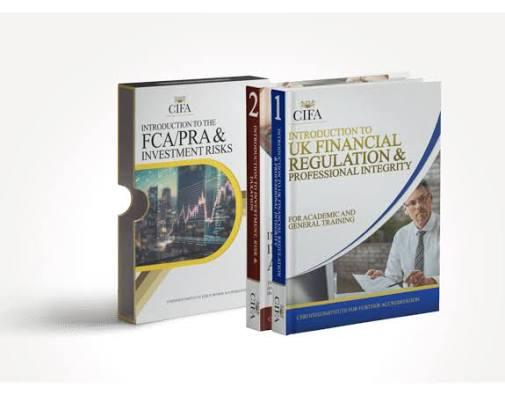
The UK financial services industry depends on effective regulation, professional integrity, and responsible investment decisions. Financial professionals need to understand how regulatory authorities operate, why compliance matters, and how investment risks can affect financial outcomes. Developing knowledge in these areas can help learners build a stronger foundation for working in finance, investment support, risk management, and compliance-related roles.
The Introduction to the FCA/PRA & Investment Risks bundle brings together two important areas of financial education: UK financial regulation and professional integrity, alongside investment principles, risk management, and taxation. By studying these subjects together, learners can develop a broader understanding of the regulatory environment and the financial considerations that influence investment decisions.
CIFA offers this digital course bundle for learners who want to strengthen their financial knowledge and explore professional development opportunities in the financial services sector.
What Is the Introduction to the FCA/PRA & Investment Risks Certification?
The Introduction to the FCA/PRA & Investment Risks is a two-course learning bundle designed to introduce learners to key concepts in financial regulation, professional ethics, investment analysis, risk, and taxation.
The programme connects regulatory awareness with investment knowledge. This is important because financial professionals need to consider both the rules governing their activities and the potential risks associated with financial products and decisions.
The bundle includes:
- Introduction to UK Financial Regulation and Professional Integrity
- Introduction to Investment, Risk and Taxation
Together, these courses provide a foundation for understanding regulatory responsibilities, ethical conduct, financial markets, investment risks, and the tax implications of investment decisions.
Understanding the FCA and PRA
What Is the Financial Conduct Authority (FCA)?
The Financial Conduct Authority (FCA) is a UK financial regulator responsible for regulating the conduct of financial services firms and relevant financial activities. Its responsibilities include protecting consumers, protecting and enhancing the integrity of the UK financial system, and promoting effective competition in consumers' interests.
Understanding the FCA is important for anyone interested in financial services because its rules and expectations influence how regulated firms communicate with customers, design and distribute products, and conduct business.
Learners studying financial regulation can benefit from understanding the purpose of regulatory supervision, the importance of fair customer treatment, and the role of compliance in maintaining trust.
What Is the Prudential Regulation Authority (PRA)?
The Prudential Regulation Authority (PRA), part of the Bank of England, focuses on the prudential regulation and supervision of banks, building societies, insurers, and certain investment firms. Its objectives include promoting the safety and soundness of regulated firms and contributing to the appropriate protection of insurance policyholders.
While the FCA and PRA have different responsibilities, their work contributes to the wider stability and integrity of the UK financial system.
Understanding the distinction between the two regulators helps learners recognise why financial firms must consider both conduct requirements and, where applicable, prudential standards.
Why Is UK Financial Regulation Important?
Financial regulation establishes standards intended to support market integrity, consumer protection, and confidence in financial services. Without appropriate oversight, consumers may be exposed to unfair practices, misleading information, unsuitable products, or poorly managed firms.
Regulation also helps define responsibilities for firms and individuals operating within regulated activities. Professionals who understand the regulatory environment are better positioned to recognise when a compliance issue may arise and when specialist advice or further guidance is needed.
The regulatory framework changes over time, so financial professionals must keep their knowledge current. A course can provide a foundation, but learners should also consult current official guidance relevant to their responsibilities.
The Importance of Professional Integrity in Finance
Professional integrity is a fundamental part of responsible financial practice. It involves acting honestly, communicating clearly, respecting confidentiality, managing conflicts of interest, and considering the impact of decisions on customers and other stakeholders.
Ethical Decision-Making
Financial professionals may encounter situations in which commercial pressure, personal interests, and customer needs compete. Ethical decision-making requires individuals to identify these competing interests and consider their responsibilities before acting.
For example, a professional should not allow a personal benefit to influence how they present an investment product to a customer. Clear disclosure, accurate information, and appropriate escalation of concerns can help support responsible conduct.
Transparency and Accountability
Transparency means communicating relevant information clearly and avoiding misleading statements. Accountability means accepting responsibility for decisions and following appropriate procedures when problems arise.
These principles help create stronger relationships between financial firms, customers, colleagues, and regulators.
Managing Conflicts of Interest
Conflicts of interest may occur when a professional's personal interests or business relationships could affect their judgement. Recognising and managing such conflicts is important for protecting customers and maintaining confidence in financial services.
The professional integrity component of the CIFA bundle introduces learners to the ethical considerations that sit alongside regulatory compliance.
Understanding Investment Principles
Investment knowledge is essential for evaluating financial opportunities and understanding how different assets may behave in changing market conditions. Investors must consider their objectives, time horizons, financial circumstances, and willingness to accept risk.
Different Asset Classes
Common asset classes include equities, bonds, cash and cash equivalents, and property-related investments. Each has different characteristics and may respond differently to interest rates, economic conditions, inflation, and market sentiment.
Equities represent ownership in companies and can provide capital growth or dividends, but their values may fluctuate significantly. Bonds generally involve lending money to an issuer in exchange for interest and repayment terms, although they also carry risks such as default and interest-rate changes.
Cash may offer liquidity and stability of nominal value, but inflation can reduce its purchasing power. Property investments may provide income or capital appreciation, but they can also involve valuation uncertainty, maintenance costs, and limited liquidity.
Understanding these differences helps learners build a foundation for comparing investment options.
Asset Allocation and Portfolio Diversification
Asset allocation involves deciding how investments should be distributed across different asset classes. Diversification spreads exposure across investments to reduce reliance on a single company, sector, or market.
Diversification does not eliminate risk or guarantee returns. However, when implemented appropriately, it can help manage concentration risk and support a portfolio aligned with an investor's objectives.
Learners can explore why portfolio decisions should consider the relationship between expected returns, risk, liquidity needs, and investment time horizons.
What Is Investment Risk?
Investment risk is the possibility that an investment will perform differently from expectations or produce a loss. Understanding risk is essential because potential returns cannot be evaluated properly without considering the uncertainty involved.
The investment, risk, and taxation component introduces learners to the types of risk that may affect financial products and portfolios.
Market Risk
Market risk is the possibility of losses caused by changes in market prices. Equity prices, bond values, currencies, and other financial instruments can fluctuate because of economic developments, interest rates, political events, and investor sentiment.
Investors need to understand that even diversified portfolios can be affected by broad market movements.
Credit Risk
Credit risk arises when a borrower or issuer fails to meet its financial obligations. It is particularly relevant when evaluating bonds, loans, and other credit-related investments.
Assessing credit risk involves considering the financial strength of the borrower, repayment capacity, and the terms of the investment.
Liquidity Risk
Liquidity risk occurs when an investment cannot be sold quickly at a reasonable price. Some assets trade frequently, while others may take longer to sell or require a substantial price reduction to attract a buyer.
Liquidity is especially important when investors may need access to their money within a specific timeframe.
Operational Risk
Operational risk can arise from failed processes, human error, systems problems, fraud, or external events. In financial organisations, effective controls and clear procedures help reduce the likelihood and impact of operational failures.
Learning about these risk categories helps learners develop a more structured approach to financial analysis.
How Risk Management Supports Better Investment Decisions
Risk management involves identifying, assessing, monitoring, and responding to risks that could affect investment objectives. It does not mean removing every possible risk; instead, it means understanding exposure and deciding whether it is appropriate.
A structured approach may include identifying an investor's goals, evaluating the risks of potential investments, considering diversification, monitoring performance, and reviewing the portfolio when circumstances change.
Financial professionals should also recognise that investment risk is personal. A strategy suitable for one investor may not be appropriate for another because their financial position, time horizon, and tolerance for losses may differ.
The CIFA bundle connects risk awareness with investment fundamentals, helping learners understand why sound financial decisions require more than looking at potential returns.
Understanding Taxation and Investment Decisions
Taxation can influence the net returns an investor receives. Different forms of investment income and gains may be subject to different tax rules, depending on the investor's circumstances, the investment, and the applicable legislation.
Tax on Investment Income
Interest, dividends, and other forms of investment income may receive different tax treatment. Understanding the relevant rules helps investors recognise why gross returns and after-tax returns are not always the same.
Capital Gains Tax Considerations
Capital gains may arise when an asset is sold for more than its allowable cost. The tax treatment depends on the asset, the individual's circumstances, applicable allowances, and current legislation.
Tax-Aware Investment Planning
Tax-aware planning considers tax implications alongside investment objectives, risk, liquidity, and time horizon. It should always be based on current rules and an accurate understanding of the investor's circumstances.
The taxation component of the bundle introduces the relationship between tax considerations and investment decisions. It should not be treated as a substitute for individual tax advice.
Who Should Consider This CIFA Course Bundle?
The Introduction to the FCA/PRA & Investment Risks bundle may be suitable for people who want to develop foundational knowledge across financial regulation and investment-related topics.
Potential learners include:
- Aspiring finance professionals who want to understand the regulatory environment before pursuing further training.
- Compliance support staff seeking to strengthen their understanding of regulation and professional conduct.
- Investment support professionals who want to learn more about investment principles and risk.
- Banking and financial services employees interested in broadening their knowledge of regulatory responsibilities.
- Risk and operations staff who want a stronger foundation in financial risk concepts.
- Career changers exploring opportunities in finance, compliance, or investment support.
- Students and recent graduates looking to develop knowledge relevant to financial services.
The programme provides educational knowledge. Completing it does not, by itself, grant FCA authorisation or automatically qualify a learner to perform a regulated activity.
Key Benefits of Studying FCA/PRA and Investment Risks
A Combined Learning Approach
Studying regulation, professional integrity, investment risk, and taxation together helps learners see how these subjects connect. Regulatory awareness supports responsible practice, while investment knowledge helps explain the risks associated with financial decisions.
Improved Financial Awareness
Learners can develop a clearer understanding of financial markets, common investment risks, and the regulatory responsibilities that influence financial services.
Support for Professional Development
The knowledge covered may complement existing experience in finance, compliance, banking, investment support, or risk-related work. It can also help learners identify subjects for further study.
Flexible Digital Learning
CIFA lists the bundle as a digital programme, making it an option for learners who prefer online study. Prospective students should review the official page for current course details, assessment requirements, and enrolment information.
What Does the CIFA Bundle Include?
According to the official CIFA course page, the bundle contains two courses and lists a total study duration of approximately 370 hours. It is delivered in digital format.
The page lists the bundle at £599. Prices and other enrolment details can change, so learners should confirm the current information before registering.
The two included courses cover UK financial regulation and professional integrity, as well as investment, risk, and taxation. Together, they offer a broad introduction to subjects relevant to understanding the UK financial services environment.
How to Make the Most of Your Learning
To get the greatest value from financial regulation and investment study, learners should connect theoretical concepts with realistic scenarios.
Start by distinguishing the responsibilities of the FCA and PRA. Next, consider how ethical principles affect customer communication, conflicts of interest, and compliance decisions. When studying investment risks, compare how market, credit, liquidity, and operational risks can affect different assets.
For taxation, focus on understanding the principles and the importance of checking current rules rather than relying on outdated examples. Reviewing mock assessments and revisiting difficult topics can also help reinforce learning.
After completing the programme, learners can identify areas where more specialised education or practical experience would support their career objectives.
Conclusion
Understanding financial regulation, professional integrity, investment risk, and taxation is valuable for anyone seeking a stronger foundation in the financial services sector. These subjects influence how financial firms operate, how professionals meet their responsibilities, and how investment decisions are evaluated.
The Introduction to the FCA/PRA & Investment Risks bundle combines two courses to introduce learners to regulatory frameworks, ethical standards, investment principles, risk management, and taxation. Through this integrated approach, CIFA provides a structured learning option for people interested in finance, compliance, and investment-related professional development.
For prospective learners, the next step is to review the official syllabus, confirm current enrolment details, and assess whether the programme aligns with their learning and career goals.
Frequently Asked Questions
1. What is included in the Introduction to the FCA/PRA & Investment Risks bundle?
The bundle includes Introduction to UK Financial Regulation and Professional Integrity, and Introduction to Investment, Risk and Taxation.
2. Who should take an FCA and PRA training course?
It may be useful for aspiring finance professionals, compliance support staff, banking employees, investment support professionals, and career changers seeking foundational knowledge of UK financial regulation.
3. Does completing this course authorise me to provide regulated financial advice?
No. Completing an educational course does not automatically grant FCA authorisation or satisfy every requirement for a regulated role. Learners should check the relevant regulatory and employer requirements.
