


SaaS Product Development Lifecycle: Every Stage Explained
Building a successful Software-as-a-Service (SaaS) product involves much more than writing code. It requires careful planning, user research, thoughtful design, reliable development, thorough testing, and continuous improvement. Every stage contributes to creating software that solves real problems and delivers long-term value to customers.
For startups and growing businesses in Accra, Ghana, understanding the SaaS product development lifecycle can help reduce unnecessary costs, improve product quality, and create a stronger foundation for growth. Working with an experienced SaaS development company Accra businesses can rely on can also make it easier to move from an initial idea to a reliable software product.
1. Idea Discovery and Market Research
The first stage is identifying the problem your SaaS product will solve. Before investing in development, businesses should understand their target audience, competitors, and potential customers' expectations.
Start by asking a few important questions:
-
What problem are customers experiencing?
-
Who will use the product?
-
How do customers solve this problem today?
-
What will make your product different?
-
Would customers pay for the solution?
For example, a Ghanaian business might need a subscription-based inventory management system that helps retailers monitor stock, manage orders, and review sales from one dashboard.
Research helps confirm whether the idea has potential and identifies the features customers need most.
2. Product Planning and Requirements
After validating the idea, the next step is defining the product's goals and requirements. This stage turns a general concept into a practical development plan.
The planning process should identify essential features, user roles, business objectives, project milestones, and an estimated budget. It should also establish which features belong in the first release and which can be introduced later.
A clear product roadmap keeps everyone focused on the same objectives. It also helps prevent scope creep, which happens when new features are continually added without reviewing their effect on cost and delivery time.
3. UI/UX Design and Prototyping
A SaaS platform should be easy to understand and use. Even a technically powerful application can struggle if customers find its interface confusing.
User interface (UI) design focuses on the visual elements, including layouts, colors, buttons, forms, and dashboards. User experience (UX) design focuses on how easily people can complete their tasks.
During this stage, designers may create wireframes, clickable prototypes, and sample screens. Testing these designs with potential users can reveal confusing navigation or unnecessary steps before development begins.
For businesses in Accra, a well-designed product should also consider the devices and internet connections their customers commonly use.
4. Technical Architecture and Technology Selection
Once the requirements and designs are clear, developers plan how the application will work behind the scenes.
This stage includes selecting programming languages, frameworks, databases, cloud infrastructure, and third-party services. The technical architecture must support the product's current requirements while allowing it to grow.
Important decisions include:
-
Frontend development: Creating the interface customers interact with.
-
Backend development: Handling business logic, authentication, and application processes.
-
Database design: Organizing information securely and efficiently.
-
Cloud infrastructure: Providing reliable hosting and deployment.
-
API integrations: Connecting payment services, communication tools, and other platforms.
A SaaS product may also require multi-tenant architecture, allowing multiple customers to use the same platform while keeping their data properly separated.
Choosing suitable technologies at this stage helps avoid expensive changes when the product begins attracting more users.
5. Minimum Viable Product Development
The next stage is building the minimum viable product (MVP). An MVP includes the essential features needed to solve the main customer problem and gather real-world feedback.
Instead of developing every possible feature at once, the team concentrates on the core functionality. For example, an early subscription-based project management platform might include user accounts, project creation, task assignments, notifications, and basic billing.
Development usually takes place in smaller iterations. The team builds features, reviews progress, addresses issues, and adjusts priorities as needed.
An MVP gives businesses an opportunity to test their assumptions with real users before making a larger investment.
6. Quality Assurance and Security Testing
Testing helps confirm that the SaaS product works as expected before it reaches customers. It should take place throughout development, not only at the end.
Quality assurance may include functional testing, usability testing, integration testing, and performance testing. Developers should verify that essential workflows operate correctly and that the application handles errors properly.
Security is equally important. SaaS products can store personal information, business records, and payment-related data. Appropriate safeguards may include secure authentication, role-based access controls, encrypted connections, regular dependency updates, and secure data handling.
Load testing can also reveal whether the application performs reliably when many users access it simultaneously.
7. Deployment and Product Launch
After testing and resolving critical issues, the application can be deployed to a production environment.
This stage includes configuring hosting, setting up the production database, enabling monitoring, and preparing the application for customers. A SaaS launch may also require subscription billing, onboarding instructions, documentation, and customer support processes.
A successful launch needs more than a working application. Businesses should make sure customers understand how to sign up, use the main features, and receive help when needed.
A staged rollout or beta launch can help identify problems before the product becomes available to a wider audience.
8. Monitoring, Maintenance, and Customer Support
The SaaS product development lifecycle does not end at launch. Once customers begin using the software, the development team must monitor performance, fix bugs, maintain security, and keep the platform reliable.
Monitoring tools can help identify slow response times, application errors, and service interruptions. Customer support can reveal recurring problems and features that users find difficult to understand.
Regular maintenance also includes updating dependencies, backing up important data, reviewing access permissions, and improving infrastructure as usage grows.
Consistent support helps build customer confidence and reduces the risk of users leaving because of unresolved issues.
9. Continuous Improvement and Scaling
The final stage is an ongoing cycle of learning and improvement. Customer feedback, product analytics, and business results help determine what to improve next.
For example, if users frequently abandon the registration process, simplifying onboarding may have more value than introducing another advanced feature. If traffic increases significantly, the team may need to optimize database queries, improve caching, or expand cloud resources.
Businesses should review product performance regularly and prioritize changes according to customer needs and measurable business goals.
This continuous process allows a SaaS product to remain useful as customer expectations, competition, and technology evolve.
How to Choose the Right SaaS Development Company in Accra
Choosing a development partner is an important decision for any business preparing to launch a SaaS product. Look for a partner who understands your business goals, communicates clearly, follows a structured development process, and considers security and scalability from the beginning.
Before starting a project, discuss the proposed scope, delivery milestones, technology choices, maintenance arrangements, and ownership of the source code. Reviewing previous work can also help you assess whether a developer's experience matches your needs.
The right SaaS development company Accra businesses choose should help turn their requirements into a practical roadmap rather than simply starting to code without a clear plan.
How Farrukh Hafeez Can Help with SaaS Product Development
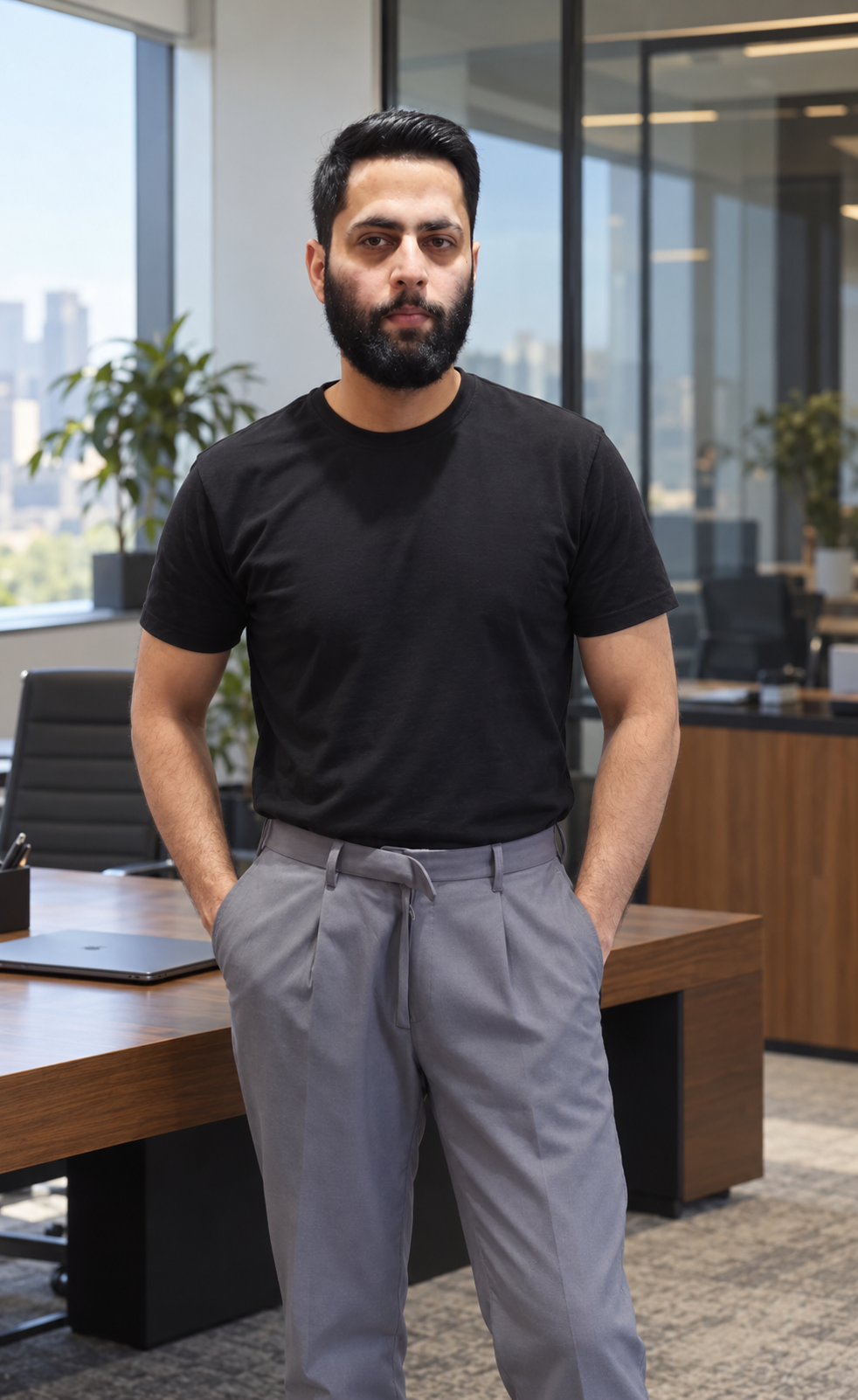
Farrukh Hafeez is a full-stack engineer and SaaS development expert with over seven years of experience building digital products. His expertise includes custom software development, web applications, scalable backend systems, API integrations, cloud-based solutions, and AI-powered applications.
Farrukh can help businesses plan and develop SaaS products by turning business requirements into technical specifications, selecting suitable technologies, building core features, integrating third-party services, and preparing applications for future growth. His full-stack experience can support projects from early planning and MVP development through deployment and ongoing improvements.
Whether you are a startup validating a new idea or an established business planning to modernize its operations, working with an experienced developer can help you build a solution that aligns with your objectives.
To learn more about his services and experience, visit Farrukh Hafeez's official website. You can review his portfolio to explore his work and schedule a meeting to discuss your SaaS project, technical requirements, and development goals.
Conclusion
The SaaS product development lifecycle provides a structured path from an initial idea to a product that customers can use and trust. Market research, planning, design, architecture, development, testing, deployment, maintenance, and continuous improvement each play an important role.
Businesses in Accra can improve their chances of success by defining clear goals, focusing on essential features, protecting customer data, and learning from users after launch. With a well-planned process and the right development expertise, a SaaS idea can become a reliable, scalable product that supports long-term business growth.
Ready to discuss your SaaS project?
-
Review the portfolio: https://farrukhhafeez.dev/
-
Schedule a meeting: https://cal.com/farrukhhafeez?redirect=false
