


Material Selection for Cryogenic Pipeline Equipment
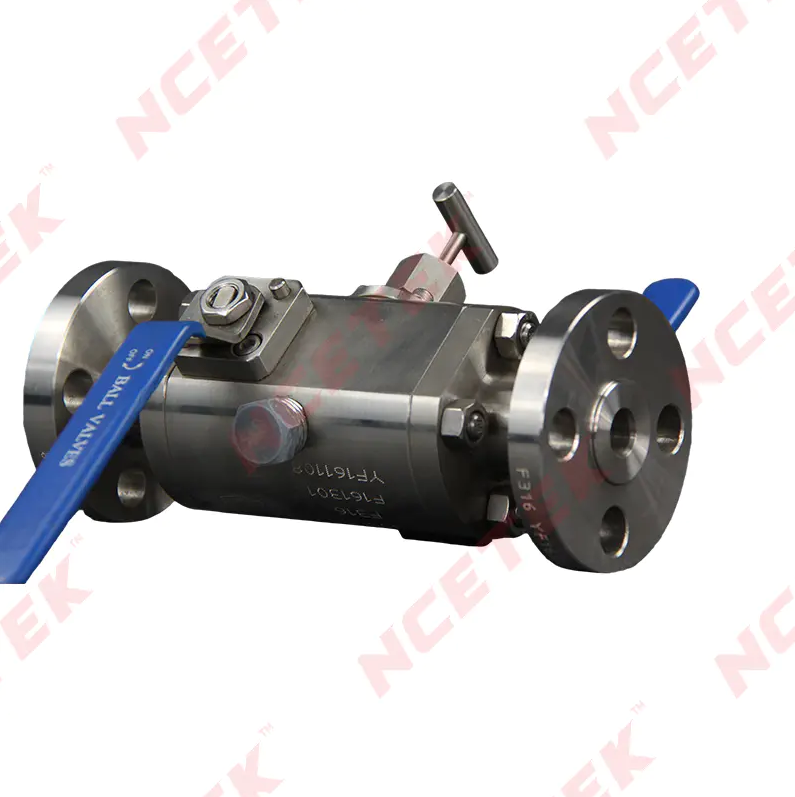
Low-temperature process systems place specialized demands on flow-control equipment because material properties, sealing behavior, and component dimensions can change as temperatures decrease. Cryogenic Ball Valve Design therefore involves coordinated consideration of material selection, thermal contraction, sealing structures, stem configuration, insulation, machining accuracy, and testing. These factors are relevant to applications involving liquefied gases, industrial gases, energy infrastructure, and other temperature-sensitive processes.
Material selection is one of the first considerations. Metals can experience changes in mechanical behavior at low temperatures, while different materials may contract at different rates. Materials selected for cryogenic applications therefore need to be evaluated according to low-temperature mechanical characteristics, corrosion resistance, process compatibility, and expected operating conditions.
The valve body and internal components must maintain appropriate relationships as temperatures change. Thermal contraction can influence clearances between the ball, seats, stem, and body. If these effects are not considered during engineering, changes in component dimensions may influence operating torque or sealing contact. The complete assembly should therefore be evaluated across the expected temperature range.
Sealing technology is particularly important in cryogenic applications. Certain conventional sealing materials may lose flexibility or experience dimensional changes when exposed to very low temperatures. Seat and stem sealing materials should therefore be selected according to temperature, pressure, process medium, and operating cycles. The objective is to maintain suitable sealing contact while allowing the ball to rotate as required.
Stem configuration can also influence thermal management. An extended stem arrangement can separate the operating mechanism from the coldest section of the valve in applications where this structure is appropriate. This can help manage temperature exposure around the stem and operating components. The final configuration should be coordinated with insulation, actuator requirements, installation space, and maintenance access.
Internal flow passages require careful attention during design and manufacturing. Appropriate passage geometry can support predictable flow while limiting unnecessary restrictions. Surface quality inside the valve can also influence interactions with the process medium and sealing components. Clean manufacturing practices are especially important in specialized low-temperature systems where contamination can affect downstream equipment.
External insulation may be incorporated to manage heat transfer between the valve and surrounding environment. Insulation should be designed so that it does not obstruct stem movement, actuator installation, inspection points, or maintenance access. The relationship between valve insulation and the surrounding pipeline insulation should also be considered to reduce unwanted thermal differences.
Manufacturing accuracy becomes particularly important when components are expected to operate across substantial temperature changes. Precision machining helps maintain the specified dimensions of the body, ball, stem, and sealing interfaces. Component inspection before assembly can identify dimensional variations that could influence operation under low-temperature conditions.
Testing procedures should correspond with the intended application. Depending on project requirements, finished valves may undergo pressure testing, leakage verification, operational checks, and other inspections. Material certificates and inspection records can also provide traceability for critical components. Testing and documentation together provide information that can support quality control throughout the equipment lifecycle.
Installation planning should consider thermal expansion and contraction, pipeline support, actuator access, insulation, and maintenance requirements. The valve should be positioned so that operating components remain accessible while the surrounding piping can accommodate expected movement. Clear installation documentation can simplify future inspection and service.
When evaluating Cryogenic Ball Valve Design, engineering teams should consider low-temperature material behavior, thermal contraction, seat and stem sealing, operating mechanisms, insulation, manufacturing tolerances, testing, and installation conditions together. Further information about industrial ball valve products and related solutions can be reviewed through https://www.ncevalve.com/product/ when matching valve construction with specialized low-temperature pipeline applications.
