


Portable Laser Cleaning Machine: A Smarter Way to Restore Surfaces With Precision
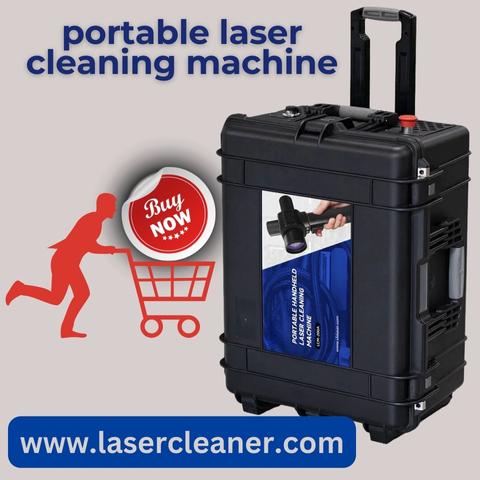
Surface preparation and maintenance are important parts of modern manufacturing, repair, restoration, and industrial production. Removing rust, paint, oil, oxidation, and other unwanted contaminants can traditionally require abrasive materials or chemical treatments. These methods may involve considerable preparation, generate waste, or make it difficult to control the cleaning process. A portable laser cleaning machine provides a modern approach that uses concentrated laser energy to remove contaminants from a wide range of surfaces.
With compact designs and increasingly practical operating systems, portable laser cleaners are being used in workshops, factories, maintenance departments, automotive facilities, metalworking businesses, and restoration projects. Their mobility allows operators to bring the cleaning equipment directly to large components, machinery, structures, or areas that cannot easily be moved.
What Is a Portable Laser Cleaning Machine?
A portable laser cleaning machine is an industrial cleaning system designed to remove unwanted materials from a surface using laser energy. Instead of relying primarily on chemicals, blasting media, or physical scraping, the machine directs a controlled laser beam toward the contaminated area.
When the laser interacts with materials such as rust, paint, grease, oxide layers, or dirt, the unwanted material absorbs energy and is removed from the surface. The operator can adjust the cleaning parameters according to the material, contamination level, and application.
The portable design usually includes a compact laser source, control system, handheld cleaning head, and supporting components. Depending on the model, the equipment may be moved around a workshop or transported between different work locations.
How Does Laser Cleaning Work?
Laser cleaning is based on controlled interaction between laser energy and surface contaminants. The laser beam is directed over the target area, where the contamination absorbs energy. Depending on the selected settings, the unwanted layer can be rapidly removed while the underlying material remains comparatively unaffected.
A scanning system can move the laser beam across the working area. This helps create consistent cleaning patterns instead of concentrating the beam continuously on one small location.
Operators need to select suitable parameters such as laser power, scanning speed, frequency, and cleaning width. Proper settings depend on the material being treated and the type and thickness of contamination.
Because different surfaces react differently to laser energy, correct parameter selection is an important part of achieving a clean and controlled result.
Removing Rust From Metal Surfaces
Rust removal is one of the most common applications for portable laser cleaning equipment. Steel components, machinery parts, tools, frames, pipes, and other metal surfaces can develop oxidation when exposed to moisture and environmental conditions.
Traditional rust removal may involve wire brushes, abrasive blasting, grinding, or chemical products. Laser cleaning offers another method by directing energy specifically toward the oxidized layer.
A portable system is particularly useful when rusty components are installed in place. Instead of transporting the entire component to another cleaning area, an operator can move the laser equipment to the workpiece.
This makes portable laser cleaning suitable for maintenance operations where equipment downtime and unnecessary transportation need to be minimized.
Paint and Coating Removal
Industrial components often require paint or coating removal before repair, welding, inspection, or refinishing. A portable laser cleaning machine can be used to remove selected coatings from metal surfaces.
The operator can guide the cleaning head over the painted area and adjust the working parameters according to the coating and substrate. This controlled approach can be useful when only a particular section of a component needs to be prepared.
For example, manufacturers may need to expose a metal area before welding or inspection. Maintenance teams may also need to remove old coatings before applying a new protective finish.
Cleaning Oil, Grease, and Industrial Contamination
Manufacturing equipment can accumulate oil, grease, carbon deposits, and other residues during continuous operation. If these contaminants are not removed, they can interfere with inspection, repair, welding, or subsequent surface treatment.
Portable laser cleaning equipment can be incorporated into maintenance procedures for metal components and machinery. Its handheld configuration allows operators to access different parts of equipment without moving large assemblies.
For workshops handling engines, mechanical components, molds, tools, and industrial machinery, laser cleaning can become part of a broader surface preparation process.
Applications Across Different Industries
The flexibility of portable laser cleaning has created applications across several industrial sectors.
In automotive manufacturing and repair, laser cleaning can be used for rust removal, paint preparation, mold cleaning, and component maintenance. Metal fabrication companies can use it to prepare surfaces before welding or coating.
In industrial maintenance, portable equipment can be taken directly to machines, production lines, pipes, and structural components. Restoration specialists may also use controlled laser cleaning for selected metal surfaces where careful material treatment is required.
The technology can also be useful in shipbuilding, railway maintenance, aerospace-related manufacturing, construction equipment servicing, and general metalworking.
Cleaning Before Welding and Surface Treatment
A clean surface is important for many welding and finishing processes. Oil, rust, oxidation, paint, and other residues can interfere with surface preparation.
Using a portable laser cleaning machine before welding can help expose a cleaner working area. Operators can target specific sections without necessarily cleaning the entire component.
After cleaning, the prepared surface can be inspected before the next manufacturing or repair stage. This makes laser cleaning a practical addition to workflows where preparation quality matters.
Portable Design for Workshop and On-Site Work
One of the most useful aspects of portable laser cleaning equipment is mobility. Large industrial components cannot always be removed from their installation location. Moving them may require additional labor, lifting equipment, transportation, and production downtime.
A portable machine allows the operator to bring the cleaning system to the component. Depending on the machine design, the equipment can be moved around a workshop or transported to an external worksite.
The handheld cleaning head also gives operators greater control when working around different shapes, edges, corners, and localized contamination.
Choosing the Right Laser Cleaning Equipment
Before purchasing a portable laser cleaning machine, businesses should consider the materials and contaminants they regularly handle. Steel, stainless steel, aluminum, and other materials may require different operating parameters.
Laser power is another important consideration. Lower-power systems can be appropriate for certain light-duty applications, while demanding industrial cleaning tasks may require higher-power equipment.
Businesses should also evaluate the machine's operating interface, cleaning head design, scanning options, portability, maintenance requirements, and available technical support.
Selecting equipment according to the actual application helps ensure that the machine fits naturally into the existing production or maintenance workflow.
Safe and Responsible Operation
Laser cleaning equipment should always be operated according to the manufacturer's safety instructions. Industrial laser systems can present serious hazards if used incorrectly.
Operators should receive appropriate training and use suitable protective equipment and controlled working environments. Laser safety procedures should be established before the machine is used in a workshop or production facility.
Ventilation and appropriate extraction should also be considered because removing coatings, rust, paint, and other contaminants can produce airborne particles or fumes.
A well-organized operating area and proper safety procedures help create a controlled environment for laser cleaning work.
Maintenance and Long-Term Use
Regular equipment maintenance is important for maintaining consistent cleaning performance. Operators should follow the manufacturer's recommended inspection and maintenance schedule.
The laser cleaning head, optical components, cables, cooling system, and other machine components should be checked according to the equipment instructions. Keeping the working environment clean can also help protect sensitive components.
Businesses should consider the availability of spare parts, technical assistance, and after-sales support when selecting equipment. Reliable support can be particularly important for companies using laser cleaning as part of daily industrial operations.
Why Portable Laser Cleaning Is Becoming Part of Modern Workflows
Industrial companies are continually looking for more controlled and practical methods of surface preparation. Portable laser cleaning fits this direction by combining concentrated laser technology with a mobile operating format.
Instead of designing the entire workflow around transporting contaminated components, businesses can use portable equipment at the location where cleaning is required. This approach can be particularly useful for large machinery, installed structures, production equipment, and repair operations.
As laser technology continues to develop, portable cleaning systems are becoming increasingly relevant for companies seeking modern surface preparation equipment.
Final Thoughts
A portable laser cleaning machine offers a flexible approach to removing rust, paint, oxidation, oil, grease, and other surface contaminants. Its handheld format makes it suitable for workshops, manufacturing facilities, maintenance teams, repair operations, and on-site industrial work.
