


How Can a Fiber Laser Welder Improve Precision and Productivity in Modern Metal Fabrication
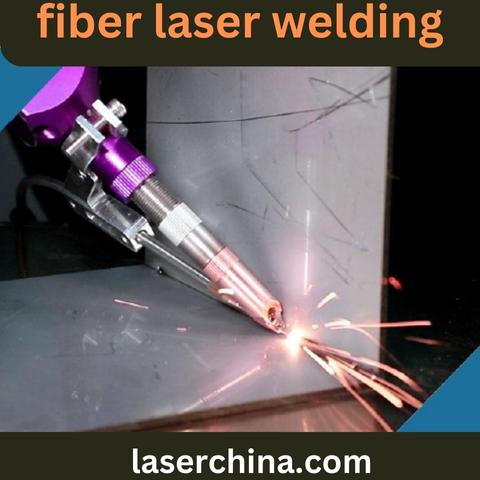
Modern metal fabrication requires equipment that can deliver accurate, consistent, and clean welding results while supporting efficient production. As manufacturers work with increasingly complex designs and different metal materials, advanced welding technology has become an important part of industrial production. A fiber laser welder provides a modern approach to joining metal components with a concentrated laser beam and precise control.
From workshops and automotive production to stainless steel fabrication and custom metal manufacturing, fiber laser welding technology is being used for applications where accuracy and productivity are important. Its controlled welding process allows operators to create strong joints while maintaining a refined appearance on many types of metal products.
Understanding Fiber Laser Welding Technology
A fiber laser welder uses a fiber laser source to generate a highly concentrated beam of light. The laser beam is directed toward the selected welding area, where its energy melts the metal and creates a connection between the components.
Unlike conventional welding methods that rely primarily on an electrical arc, fiber laser welding concentrates energy into a relatively small working area. This allows the operator to control the welding process more precisely, particularly when working with thin sheets, detailed components, and products requiring a clean finish.
The technology can be configured for different production environments, from compact workshop equipment to industrial systems designed for continuous manufacturing.
Why Fiber Laser Welding Is Used in Metal Fabrication
Metal fabrication involves many different materials, thicknesses, shapes, and production requirements. A single welding process may not be suitable for every application. Fiber laser welding provides manufacturers with a flexible option for applications requiring controlled heat input and accurate joining.
Industries commonly explore fiber laser welding for stainless steel, carbon steel, galvanized materials, aluminum, and other compatible metals. Depending on the equipment configuration and material, operators can adjust parameters such as laser power, welding speed, wire feeding, and shielding gas.
This level of control helps manufacturers adapt the welding process to specific components rather than relying on one fixed setup.
Applications of a Fiber Laser Welder
A fiber laser welder can be used across a wide range of manufacturing and fabrication applications. Stainless steel cabinets, metal frames, machinery components, automotive parts, kitchen equipment, pipes, and customized metal products are examples of products that may require precise welding.
In sheet-metal fabrication, laser welding can be used to join panels and components while maintaining a controlled weld area. Manufacturers producing decorative metal products may also use laser welding where the visual appearance of the finished joint is important.
Automotive manufacturers and component suppliers can use laser welding technology for selected metal assemblies, brackets, structural components, and precision parts. In industrial equipment manufacturing, it can support the production of machine housings, frames, enclosures, and specialized components.
The appropriate equipment and welding parameters depend on the material, thickness, joint design, and production requirements.
Working With Different Metal Materials
Different metals respond differently to heat, so selecting appropriate welding parameters is essential. Fiber laser welding equipment can be configured for various materials, but operators need to understand the characteristics of each material before beginning production.
Stainless steel is widely used in fabrication because of its corrosion resistance and attractive appearance. Fiber laser welding can be suitable for producing stainless steel components where controlled heat input and neat welds are required.
Carbon steel is another common material used in industrial manufacturing. Depending on thickness and equipment power, fiber laser welding can be applied to different carbon-steel components.
Aluminum requires careful parameter selection because of its thermal properties and reflective surface. Modern laser welding systems can be configured for suitable aluminum applications when the correct laser source, settings, shielding, and joint preparation are used.
Choosing the Appropriate Laser Power
Laser power is one of the important factors when selecting a fiber laser welding machine. The appropriate power level depends largely on the material type, thickness, welding speed, joint design, and production requirements.
Lower-power systems may be suitable for thin metal sheets and precision fabrication. Higher-power equipment can be considered for thicker materials and demanding industrial applications.
Manufacturers should avoid choosing equipment based only on maximum laser power. The complete welding system, including the laser source, optical components, control system, cooling system, welding head, and wire-feeding arrangement, should match the intended application.
Handheld Fiber Laser Welding Systems
Handheld systems have become popular among workshops and manufacturers that require flexibility when welding different components. A handheld fiber laser welder allows an operator to move the welding head manually and work with components in different positions.
This approach can be useful for customized fabrication, repair work, metal furniture, stainless steel products, machinery parts, and small- to medium-scale production.
The operator still needs proper training to understand laser safety, material preparation, welding parameters, shielding gas, and equipment operation. Correct technique plays an important role in achieving consistent results.
Preparing Metal Before Welding
Good preparation is an important part of the welding process. Dirt, oil, rust, paint, moisture, and other contaminants can affect the welding area and may reduce the consistency of the finished joint.
Before welding, metal surfaces should be inspected and cleaned appropriately. Components should also be positioned accurately so that the joint remains stable during the welding process.
For precision applications, correct alignment and suitable joint preparation can make a significant difference. Manufacturers should establish repeatable preparation procedures so operators can maintain consistent production standards.
Understanding Welding Parameters
Successful laser welding requires more than simply directing a laser beam toward two pieces of metal. Operators need to understand parameters such as laser power, welding speed, focal position, shielding gas flow, wire-feed rate, and beam characteristics.
Increasing or decreasing welding speed can affect penetration and the appearance of the weld. Similarly, incorrect focus or unsuitable power settings can influence the welding result.
For this reason, manufacturers should develop suitable parameter settings through controlled testing. Once reliable settings have been established for a particular material and thickness, they can be documented and used as part of a repeatable production process.
Fiber Laser Welding in Different Industries
The growing use of laser technology has expanded the role of laser welding across many manufacturing sectors. Metal fabrication companies use it for customized products, industrial components, enclosures, and sheet-metal work.
The automotive sector can use laser welding for selected vehicle components and assemblies. Furniture manufacturers may use it for metal frames and decorative structures. Kitchen equipment producers can apply the technology to stainless steel products, while machinery manufacturers can incorporate laser welding into the production of specialized industrial components.
Electronics and precision manufacturing can also require controlled welding for smaller metal parts and assemblies. As production requirements continue to evolve, laser welding technology can provide manufacturers with another option for precise metal joining.
Maintaining a Fiber Laser Welding Machine
Regular maintenance is essential for maintaining reliable equipment performance. Operators should follow the manufacturer's maintenance schedule and inspect important components regularly.
The welding head, protective lenses, cooling system, optical path, gas connections, and other relevant components should be checked according to the equipment manufacturer's instructions. Dust or contamination around optical components can affect laser transmission and welding quality.
Laser Safety and Operator Training
Laser welding equipment requires responsible operation because high-power laser systems can create serious safety hazards. Appropriate protective equipment, controlled work areas, safety interlocks, ventilation, and operating procedures should be established according to applicable regulations and the machine manufacturer's instructions.
Operators should receive proper training before using the equipment. Training should cover machine controls, material preparation, parameter selection, emergency procedures, maintenance requirements, and laser safety.
Selecting a Fiber Laser Welder for Your Workshop
When selecting a fiber laser welder, manufacturers should consider the materials they regularly process, typical material thicknesses, required production volume, available workspace, and operator experience.
Other factors include laser source quality, welding-head configuration, cooling method, control interface, wire-feeding system, available service support, replacement components, and warranty coverage.
Final Thoughts
A fiber laser welder represents an advanced approach to modern metal joining, offering precise laser energy control for a wide variety of fabrication applications. From stainless steel products and automotive components to machinery, furniture, and customized metal structures, this technology can be integrated into many different production environments.
