


Standing Seam Metal Roofing vs Traditional Roofing: Why Architects Choose It
Roofing is no longer simply about protecting a building from rain and weather. In modern architecture, the roof can become one of the most important visual elements of the entire structure.
This is one reason standing seam metal roofing has become an attractive option for architects, builders, and property owners working on contemporary residential and commercial projects.
With concealed fixings, clean linear seams, customisable panel widths, and multiple metal choices, standing seam provides a level of design flexibility that can be difficult to achieve with more conventional roofing systems.
What Makes Standing Seam Different?
Traditional metal roofing systems may use exposed fasteners or fixed panel configurations.
Standing seam takes a different approach.
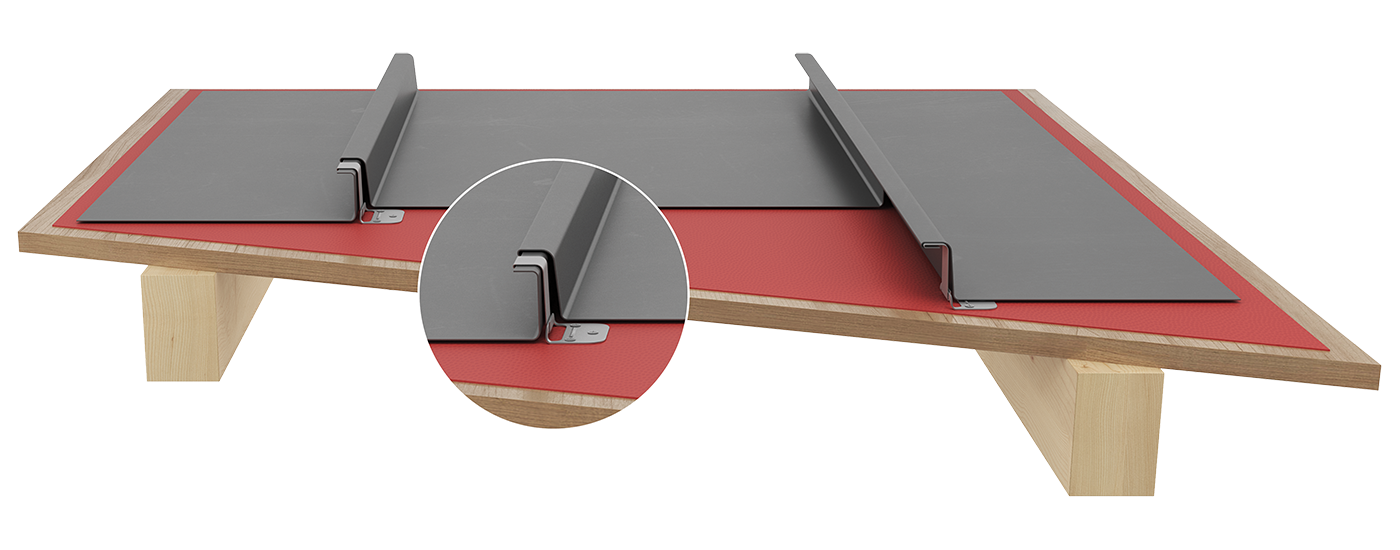
The panels are connected through raised seams, while stainless-steel clips are concealed beneath the panels. The clips allow the metal to expand and contract as temperatures change.
This creates a clean surface without rows of exposed fasteners interrupting the architectural design.
For contemporary buildings, that minimalist appearance can make a significant difference.
A Cleaner Architectural Appearance
Modern architecture often relies on simplicity.
Large uninterrupted surfaces, precise lines, and carefully aligned materials can create a strong visual identity.
Standing seam supports this design approach through its narrow raised seams.
The seams create subtle shadow lines that change with the direction and intensity of sunlight. Instead of treating the roof as a separate element, architects can use the seams as part of the overall building design.
Customisable Panel Widths
One of the major advantages of architectural standing seam is the ability to customise panel widths.
Roofing Group states that its manufacturing equipment allows standing seam pan widths to be customised to the millimetre.
This can be important for projects where symmetry and alignment are priorities.
For example, the seam layout can be designed around:
-
Window openings
-
Skylights
-
Doors
-
Building widths
-
Wall sections
-
Roof geometry
-
Facade proportions
Instead of forcing the architecture to fit a fixed panel width, the roofing system can be adapted to the design.
Standing Seam Is Not Limited to Straight Roofs
Architectural projects frequently include unusual shapes.
A roof may transition into a wall. A facade may include curves. A building may use different panel directions to create a specific visual effect.
Standing seam provides flexibility for these applications.
Roofing Group's system supports tapered, curved, convex, and concave designs, while single-lock wall cladding can be installed horizontally, vertically, or diagonally.
This makes standing seam particularly suitable for buildings where standard rectangular panels aren't enough.
Standing Seam Roofing and Cladding Can Work Together
A major architectural advantage is the ability to connect roofing and wall cladding into a coordinated system.
Double-lock standing seam can be used for roofing, while single-lock standing seam can be used for wall cladding.
This allows designers to create a continuous visual language between the roof and facade.
Instead of having an obvious transition between different exterior materials, the building can use related standing seam systems to create a more integrated appearance.
Choosing the Right Metal
The appearance and characteristics of standing seam can change significantly depending on the metal selected.
Zinc
Zinc is well suited to architectural projects where long-term appearance and natural weathering are important.
Roofing Group states that its VMZINC material develops a natural protective layer and has a listed lifespan of approximately 50–80 years depending on location.
Copper
Copper is frequently chosen for distinctive architectural applications.
Its surface changes naturally over time as it develops a protective patina. Roofing Group lists an approximate lifespan of 70–100 years depending on location.
Aluminium
Aluminium provides another architectural option, with Roofing Group listing an approximate lifespan of 40–60 years depending on location.
COLORBOND®
COLORBOND® provides a broad colour selection and is manufactured in Australia to relevant Australian Standards.
It can be a practical choice when designers want the appearance and functionality of standing seam combined with a familiar Australian roofing material.
Corten
Corten provides a distinctive weathered appearance and can be used where the facade is intended to develop a strong natural, industrial character.
Standing Seam for Sydney Architecture
Standing seam is particularly relevant to Sydney's architectural landscape, where contemporary residences, commercial buildings, heritage projects, and high-end developments often require specialised roofing and cladding.
Roofing Group has completed standing seam projects in locations including Vaucluse, The Rocks, Erskineville, and Sydney's major commercial areas.
These projects demonstrate how the system can be adapted to very different architectural styles.
Technical Planning Matters
The appearance of standing seam may look simple, but the installation system requires careful technical planning.
Roofing Group's technical specifications include continuous roof or wall top hats at maximum 600mm spacing, a minimum 3-degree roof pitch for its double-lock system, breathable waterproofing membrane, concealed standing seam clips, and provisions for ventilation.
The specific substrate and buildup should always be determined according to the project design, applicable requirements, material selection, and technical documentation.
What Is Oil-Canning?
Architectural metal panels can sometimes show a subtle waviness known as oil-canning.
Roofing Group notes that the appearance can vary depending on factors including panel length, colour, alloy, gauge, substrate condition, and sunlight exposure. It also notes that oil-canning is an aesthetic characteristic rather than an indication of panel performance.
Understanding this characteristic during the specification stage can help architects and clients establish realistic expectations for large flat metal surfaces.
Why Specialist Installation Matters
Standing seam is a specialised architectural roofing and cladding system.
The success of the finished installation depends not only on the metal panels but also on correct detailing, substrate preparation, clips, seams, penetrations, ventilation, and waterproofing.
Roofing Group states that it works closely with architects during the design stage to provide expertise around installation and technical details.
Early technical coordination can help identify potential issues before construction begins.
Is Standing Seam Right for Your Project?
Standing seam may be appropriate when a project requires:
-
A minimalist architectural appearance
-
Concealed fixing
-
Custom panel widths
-
Roof and wall integration
-
Curved or tapered panels
-
Premium architectural metals
-
Residential or commercial applications
-
Strong visual seam lines
-
A durable exterior envelope
However, the appropriate system, metal, substrate, and installation method should always be selected based on the project's specific architectural and technical requirements.
Final Thoughts
The popularity of standing seam metal roofing comes from more than its modern appearance.
It offers architects a flexible system that can combine roofing and cladding, accommodate different geometries, hide fixings, and work with materials ranging from zinc and copper to aluminium, COLORBOND®, Corten, and stainless steel.
For architects, builders, and property owners seeking a distinctive architectural roof or facade, standing seam provides a practical way to combine clean design with engineered roofing and cladding performance.
With the right material, detailing, substrate, and installation approach, standing seam can become a defining feature of a residential or commercial building.
