


Building a Unified Digital Ecosystem with SPAs and Multiplatform Apps
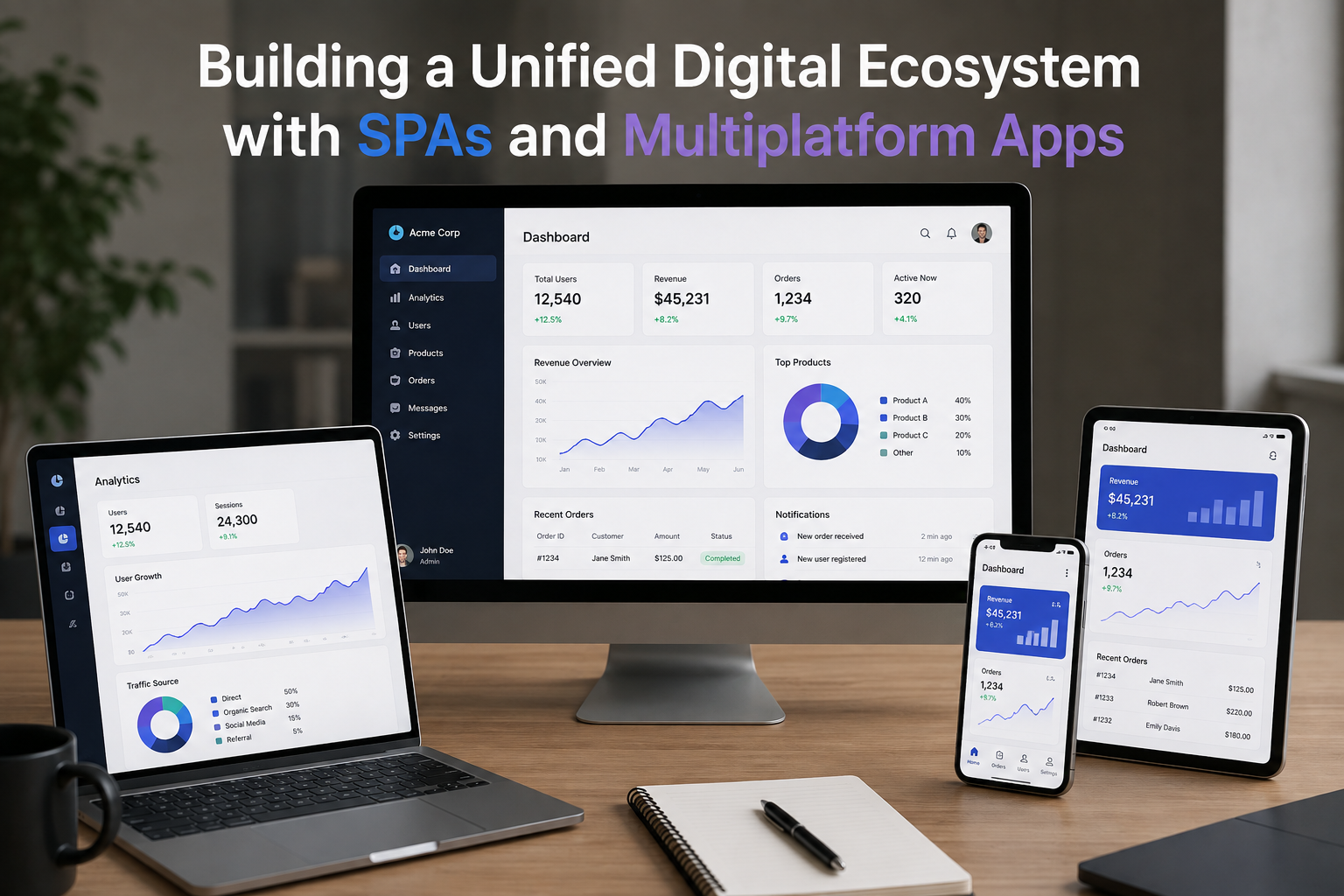
Your customers visit your site on their desktops, and then download your mobile app to use on their phone, where they have slightly different experiences.
Your analytics systems will not be able to monitor unified customer journeys. You have to deal with the hassle of your customers switching platforms.
The solution? Creating a digital ecosystem by adopting the benefits of single-page application on the web with multiplatform mobile applications for mobile.
Introduction to SPAs and Multiplatform Development
But first, we should try to understand the components in order to discuss unified ecosystems.
The advantages of single-page application architecture and multi-platform mobile application building are significant after you know the advantages that each one provides.
Single Page Applications (SPAs)
A single-page application loads only once when users enter your site. The app doesn't refresh the entire page with each interaction, but only the content that has changed.
You click on a link and the information changes instantly without reloading the page. You work with forms and have feedback on them right away without any network round-trips.
The experience is fast, responsive, and feels like an app.
Multiplatform Mobile App Development
Multi-platform mobile app development is the creation of an iOS and Android application from a single code base, such as React Native, Flutter, or any other framework. You write code once, deploy twice, rather than having to handle both iOS and Android separately.
The Unified Ecosystem
The true opportunity lies in thinking strategically about how SPAs and multiplatform mobile app development can complement each other to achieve a consistent customer experience.
Rather than having to rely on multiple systems to compete for resources, think of one web SPA and mobile apps using the same back-end APIs. You log in once, and authentication is performed anywhere.
Your development team is more effective since they are not repeating tasks.
A feature that is created in backend API code is available to all frontends. Single-page application design (reusable components, shared logic) is beneficial on all platforms.
You don't have to create backend functionality separately for iOS and Android, which speeds up multiplatform mobile app development.
You're using a single backend system instead of many. You have only one database schema. Your security policies are consistent. It's all in a single place. The operational complexity is greatly reduced.
Your analytics team monitors unified customer journeys across all platforms. If a customer begins searching online and then goes onto the mobile device, they are one and the same, and not two distinct entries.
Case Study: How to Compete in Unified Digital Ecosystems
Think of a new market that’s competing with an existing market.
The old way: make a website team, make an iOS team, make an Android team. Every team operates in a different language, with different frameworks to solve the problems, and copies the logic over and over.
The second method provides:
● A more rapid feature development due to no duplication of work between teams.
● Improved quality since code behind is shared and tested once, used everywhere.
● Faster bug fixes as fixing the backend would result in it being fixed on all platforms.
● Reduce overall cost of development since you're not investing three times
● Improved customer experience as it appears more cohesive than broken up
In the event that you are creating a new digital presence or growing existing platforms, here are a number of thoughts to consider on unified ecosystems:
Begin with the architecture of the back ends:
Your back end is where it all starts. APIs are the key to either making or breaking a unified ecosystem. Design APIs that are platform-independent, versioned correctly, and able to meet various client requirements. This back end will serve as a common base for all.
Are you capable of delivering fast, responsive, and real-time web experiences through your APIs? Otherwise, they won't support mobile applications either. Your SPA lends credibility to your back-end thinking.
If you have a mediocre experience on the web, it will not be better on mobile. Just the same APIs can be used to create a mobile app with the same great web experience.
Digital Ecosystems Are Strategic Imperatives: Conclusion
The advantages of single-page application architecture and multi-platform mobile application development are definitely persuasive on their own. When combined strategically, they make seamless digital ecosystems that out-compete at least competitive platforms.
Customers today expect a seamless experience across devices. They want real-time, reactive feedback in every situation.
They want their data and context to be transferred across many platforms. You need a coordinated digital approach, not platform-by-platform thinking.
